
Award winner
Find at
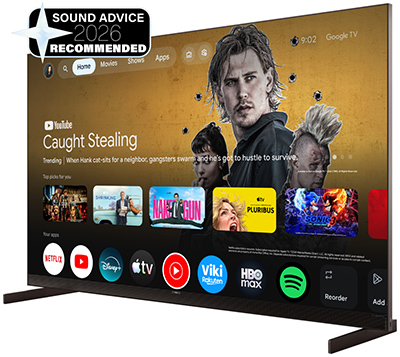
Outstanding though I found TCL’s 65C8L Super Quantum Dot TV to be in my recent review, that set doesn’t belong to TCL’s flagship range for 2026. The honour belongs to the X11L series, as represented here by the smallest model available: the 75in 75X11L.
It’s an honour this television actually earns with remarkable ease, too, despite the 65C8L delivering levels of specification and performance well beyond its price. The 75X11L claims, for instance, a sun-challenging 9000 nits of brightness, while also controlling all that light with a mind-boggling 11,520 separate local dimming zones.
Not surprisingly, these sort of ‘tech showcase’ specifications attract a price premium over the C8L series - the 75X11L costs £3999 versus the 75in C8L’s £2299. At the same time, though, a similar sort of specification would almost certainly attract a significantly higher price than £3999 from most, if not all, rival TV brands at the moment. So am I actually about to suggest that a £3999 TV is a bargain? Yes, I think I probably am…
Picture quality
At first glance, the 75X11L’s pictures are the TV equivalent of ‘shock and awe’. Yet the longer you live with them, the more you see past the razzle-dazzle to find a presentation that very much appreciates the finer, subtler things in home cinema life too.
Let’s raise a glass to the 75X11L’s extreme stuff first, though, starting with its brightness. While my own tests topped off at around 8760 nits (not quite reaching the claimed 9000 nits), this is an incredible amount of light - more than twice as much as anything delivered by even the most extreme TV stars this year (such as Sony’s Bravia 9 II, Samsung’s 65S99H OLED and LG’s OLED65G6).
You do, it has to be said, have to be quite specific with the TV’s settings to achieve its maximum brightness, Including using the TV’s ‘Vivid’ preset - which can cause colours to look distractingly exaggerated and unnatural. So it’s likely that few X11L owners will often experience its full brightness ‘glory’ during regular day to day viewing. The TCL still hits more than 7000 nits in the stunningly watchable ‘Standard’ preset, though, and 3750 nits in the accuracy-focused ‘Filmmaker Mode’. So even when reined in a bit, the 75X11L can still deliver high dynamic range video with a level of brightness and intensity the like of which I haven’t seen outside of futuristic concept screens at big technology shows.
The 75X11L’s Super Quantum Dot colours are also utterly spectacular. Super Quantum Dots are designed to deliver wider gamuts, more colour accuracy and enhanced stability under extreme operating conditions, and here they deliver a combination of colour saturations, gamut extremes and volumes that’s subjectively out of this world. Objective measurements taken using Portrait Displays’ ‘Calman Ultimate’ software confirm the screen is capable of reproducing more than 90% of the most extreme colour range - called Rec 2020 - currently used in the home video world. And since the vast majority of content is mastered with a much narrower gamut than BT.2020, to say the 75X11L has the colour expression to fully cover almost anything the content world might throw at it is an understatement. In fact, all of its picture preset options (bar ‘Filmmaker Mode’) actively expand content’s colour range to take advantage of the screen’s much wider capabilities.
This might sound troublesome to the more puritanical reader. However, as well as the 75X11L providing ‘Filmmaker Mode’ images that do a fantastic job of holding pictures to established video standard while still looking gorgeously balanced, nuanced and natural, the way the 75X11L manages to dial things up in (especially in its ‘Standard’ preset) actually serves as pretty jaw-dropping evidence of how much better TCL’s image-processing has become over the past couple of years. Everything about the ‘Standard’ preset’s brightness, colour and contrast expansion is delivered with great sensitivity, balance and nuance - as well as an understanding of how to make ultra-punchy pictures remain immersive and engaging. Simply make sure they aren’t riddled with glaring errors or distracting over-cooking.
The 75X11L’s contrast needs further discussion. It might be the 75X11L’s remarkable brightness and colour charms that first catch the eye, but arguably the heart of what makes this TV truly great, rather than just a surprisingly affordable technology showcase, is how it still manages to deliver phenomenally deep, rich and even black tones by LCD TV standards. Those 11,520 dimming zones are put to impressive use, almost defying belief in terms of how well they can produce often OLED-esque black levels right alongside bright highlights that don’t seem to lose any of the screen’s fearsome punch.
Even more remarkably, the 75X11L’s dazzling mix of deep blacks, exceptionally bright whites and incredibly bold colours is achieved with remarkably little backlight haloing around even the most intense stand-out areas of the picture. Provided you’re watching the screen from more-or-less directly opposite, anyway - haloing issues become much more noticeable from viewing angles of around 40 degrees or more.
There’s nothing forced about the 75X11L’s excellent black levels, either. By which I mean dark scenes are packed with subtle shading details, as well as managing to retain full-colour saturations rather than colours fading away when there isn’t much light to feed on. This sense of subtlety, alongside unprecedented extremes, is apparent in the 75X11L’s colour expression as well. Skin-tones are nuanced enough to never end up looking mannequin-like or coarse, even the finest colour blends are handled without striping noise, and the image enjoys a three-dimensionality and depth you only get when the finest colour shifts and details are being accurately reproduced.
Issues with the 75X11L’s pictures are hard to find. Aside from the previously mentioned backlight blooming with off-axis viewing, all that’s worth reporting is the screen’s reflectivity relative to the latest Samsung and Sony TVs (though some AV fans will actually prefer the TCL’s glossier look), the fact that some low-quality, heavily compressed HD pictures can look rougher than I’d like after going through TCL’s upscaling system, and that once in a blue moon the 75X11L’s ‘Standard’ and ‘Dolby Vision Bright’ modes can suddenly introduce some greyness to particularly dark shots or scenes.
These little niggles rarely become distracting, though, leaving the 75X11L’s sensational combination of the jaw-droppingly spectacular and immersively subtle as its defining characteristic. This is a TV that’s both dazzlingly effective in a bright room in its ‘Standard’ preset, but also provides a remarkably accurate and clean ‘Filmmaker Mode’ for serious movie nights, too.
Sound Quality
TCL’s latest sound collaboration with Bang & Olufsen is, mostly, very impressive. For starters, the 3.1.2 -channel speaker system (comprising forward-facing left, right and centre speakers, a pair of ‘surround’ channels delivered by drivers built in the upper left and right sides, and two rear-mounted subwoofers) delivers a lovely premium tone that can handle high volumes without sounding remotely strained or brittle.
The subtlest details in dense movie mixes are not only crystal clear, but are also presented with the correct balance and relative weight more consistently than was the case with last year’s Band & Olufsen-equipped TCL TVs. This makes the soundstage more believable and involving - especially as the much-improved staging also spreads strongly beyond the edges of the screen, including upwards as well as sideways.
Sonic transitions across the screen are handled outstandingly well, too - dialogue is always clear, and the midrange is both expansive and capable of accommodating high levels of density without starting to sound muddy. The fact the TV includes essentially a built-in soundbar running the full length of the TV’s bottom edge means the main left, right and centre channel sound effects are delivered with plenty of room-filling forward force, too.
But while improved over last year’s slightly disappointing TCL/B&O collaborations, the 75X11L’s sound isn’t perfect. The dual subwoofer arrangement doesn’t contribute as much bass depth or potency to proceedings as it looks like it should, for instance, regardless of whether it's dealing with a protracted deep drone or a more percussive bass effect. Sometimes the speakers can fail to portray sudden impact sounds, too, and the sound can slightly collapse back on itself during really dense action- or horror-movie moments. And dialogue, while always ultra-clear, can sometimes sound like it’s coming from slightly below the onscreen action.
Living with the TCL 75X11L
At 40.5kg without its stand, the 75X11L is a brutishly heavy TV, which speaks to the uncompromising quality of both its build and its internal components - including that fancy Bang & Olufsen speaker system.
The inclusion of what’s essentially a soundbar hanging from the screen’s bottom edge may be a little aesthetically divisive, especially as it’s covered in an attention-grabbing grille finished in a metallic champagne colour. I personally don’t mind it - the metallic finish will definitely help convince friends and family you’ve bought a properly premium TV, while the front-firing speakers definitely play a part in the TV’s mostly strong sound performance.
While the 75X11L’s screen carries a degree of reflection filtering, this is not nearly as potent as the systems found on the latest premium TVs from Samsung or Sony. So you will still see reflections from bright light sources - something to think about when figuring out where to put the 75X11L in your room.
Connectivity is excellent. The set’s USB inputs include one tucked into the TV’s sides for easy access, while all four HDMI ports on the 75X11L provide a full set of gaming features, including support for 4K@144Hz gaming feeds, variable refresh rates, and ‘Dolby Vision Game’ mode. The refresh rate can be upped to a super-fast 288Hz, too, if you don’t mind reducing the resolution to full HD. The 75X11L’s remarkable brightness, sharpness and colour join with a speedy input lag time of just 11.8ms to deliver a truly outstanding gaming performance - it’s a match for the best TV or a dedicated gaming monitor I’ve seen.
The 75X11L is capable of playing all four of the main HDR formats in the home entertainment world these days: HLG, HDR10, HDR10+ and Dolby Vision. This means that it will always take in the best version of any video content you care to feed it.
Providing the 75X11L with its smart features and interface, finally, is the Google TV system - it’s bolstered by the appearance of the BBC iPlayer app that can elude Google TV implementations in other TVs and projectors.
Verdict
I have to admit I half-expected TCL’s flagship TV to be little more than a hardware showcase: a TV designed to show off the extremes of what TCL’s Super Quantum Dot technology can do without actually being something you’d enjoy watching for more than a few minutes at a time. I’m happy to say I couldn’t have been more wrong.
TCL marshals the prodigious capabilities of its premium 2026 TV into delivering pictures that manage to combine incredible ‘next-gen’ spectacle with the sort of subtleties, refinements, balance and local light control that serious AV fans crave - and which completely absolves the TV of accusations that it’s only about delivering crazy specs for crazy specs’ sake. Especially as it thinks nothing of reining in its extreme instincts for a brilliantly accurate and immersive ‘Filmmaker Mode’.
Test Samples
Blade Runner 2049 4K Blu-ray
I’ve picked this one out mostly for its massive Dolby Atmos audio mix, which really shows off the power, scale and detailing of the 75X11L’s Bang & Olufsen speaker system. It also occasionally exposes the slight lack of oomph and bite in its bass response and the odd lack of coherence with specific impact sounds.
Forza Horizon 6 Xbox Series X
The gloriously vibrant and pristine graphics of Forza Horizon 6’s huge selection of immaculately rendered cars, together with the beautiful description of the game’s Japanese settings, are taken to a whole new level of beauty and spectacle by the X11L’s fearsome brightest and colour capabilities.
Pan 4K Blu-ray
Pan isn’t a great film, alas. Its 4K Blu-ray, though, deploys a 4000-nit master, rather than the more conservative masters you get with most 4K Blu-rays - and the 75X11L loves it, delivering the film’s brightest highlights without losing details or bleaching out like the majority of other TVs do to some extent. The Pan master is also expanded particularly well by the 75X11L's ‘Standard’ preset, thanks to the disc providing an already relatively extreme starting point.
If you often find yourself watching TV in a bright room, the incredible brightness and dynamism of the 75X11L’s pictures retain a level of spectacle that no other realistically priced TV has ever produced. Even better, the spectacular nature of the 75X11L’s delivery doesn’t stop it from also caring about the finer aspects of home cinema art - including providing an excellent ‘Filmmaker Mode’ preset. In short, the 75X11L is that rarest of things: a TV capable of showcasing the extremes of TV technology while still actually delivering images that are consistent, balanced and natural enough to get properly lost in.
The extreme nature of the 75X11L’s picture means that while its ‘upgrading’ processing is actually very good in the main, especially when it comes to expanding HDR content for its ‘Standard’ picture preset, the set still benefits from being fed high-quality content. With this in mind a willingness to commit to the 4K disc format is highly recommended, using a good quality player such as the Panasonic UB820 or, ideally, UB9000.
It’s well worth adding a high spec PC or Xbox Series X/PlayStation 5 console if you have any interest in gaming too. The disc drive-based PS5 actually also has a decent 4K Blu-ray player built in (the one in the Xbox is a bit rubbish), but be aware this doesn’t support all the HDR formats the Panasonic models do.
