
Award winner
Find at
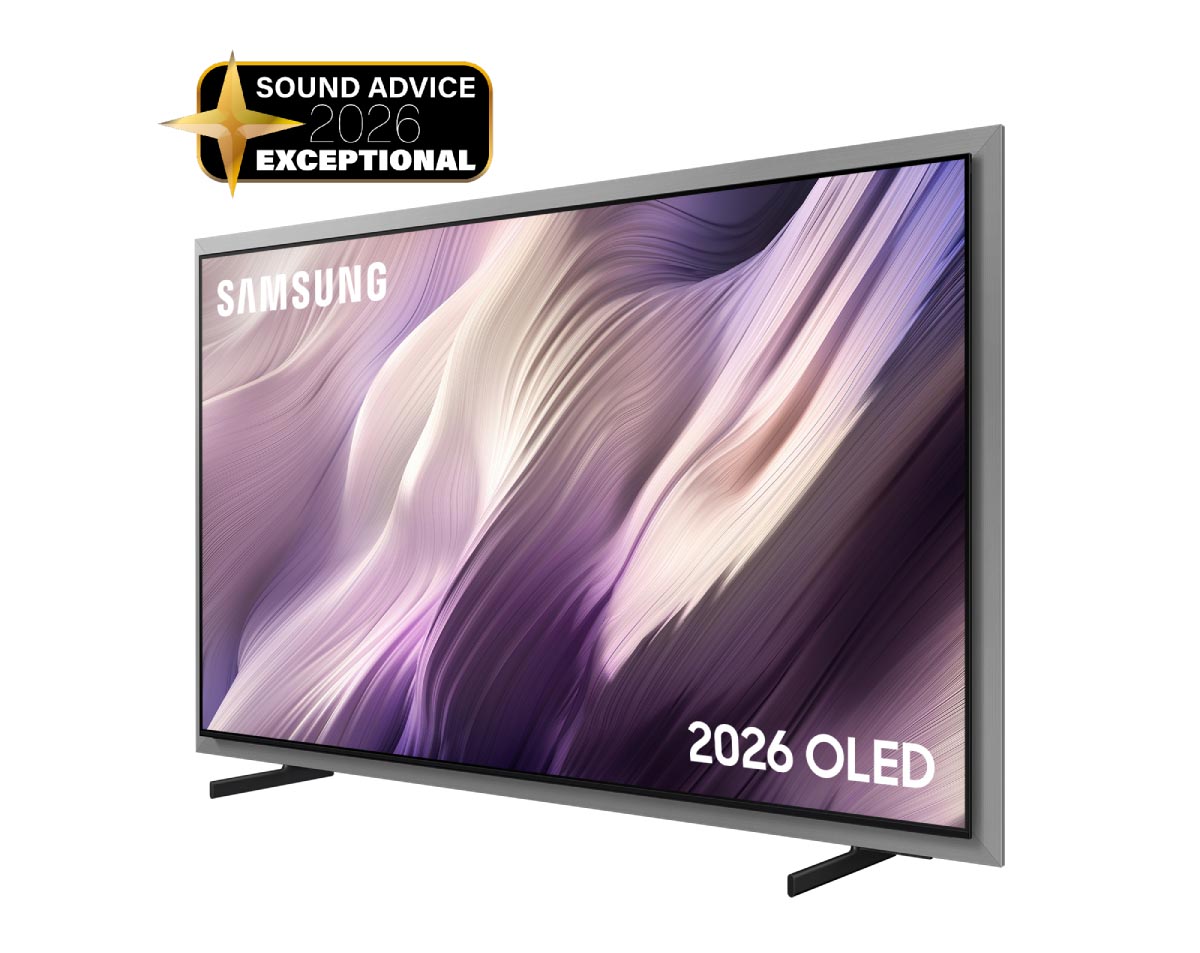
The OLED stars really seem to be aligning this year. No sooner do I get my pulse rate back down after spending quality time with LG’s wondrous OLED65G6 than I find myself getting all giddy again thanks to the latest flagship OLED TV from arch-LG rival, Samsung.
The 65S99H is the latest OLED TV to use Samsung’s Quantum Dot-based variation on the OLED theme. In fact, the S99H series (which, for reasons known only to Samsung, is called the S95H in the United States) is the only OLED series in Samsung’s 2026 TV range where you can get your hands on QD OLED technology, with all screen sizes of the step-down S90H OLED series now confirmed to be using the more traditional WRGB OLED approach.
Removing QD OLED technology from the S90H series does mean there’s no particularly affordable way to get your hands on QD OLED’s pure RGB colours and extreme brightness potential. But while the 65S99H’s £3499 asking price certainly isn’t cheap by today's 65in TV standards, I’d say it’s worth every single penny.
Picture Quality
Once upon a time Samsung’s TV picture genius tended to be a bit one-sided, excelling with the eye-catching showy stuff but not always having the discipline to cater for the serious ‘show me what the director intended’ AV crowd. The 65S99H, though, provides the most jaw-dropping evidence yet of just how completely Samsung has turned this around - it provides picture quality that can switch gears between ‘dazzlingly explosive’ and ‘incredibly accurate’ at the press of a button.
Sucker that I am for relatively extreme displays of high dynamic range’s potential, I instantly fall in love with the ‘Standard’ picture mode the 65S99H defaults to once you’ve switched off its various power-saving features. Brightness, for starters, is like nothing I’ve seen before - including in the more brightness-oriented LCD TV world. Light, boldly coloured highlights erupt off the screen with an intensity and vibrancy that has to be seen to be believed. Especially if the bright highlights are appearing against a dark backdrop, thanks to OLED’s peerless talent for being able to combine inky blacks with bright highlights within the same image without any compromise.
Crucially, though, thanks to a more rounded and grounded approach to ‘Standard’ preset imagery from Samsung’s latest, catchily named NQ4 AI Gen 3 processor, all the 65S99H’s spectacular colour and brightness is delivered with so much careful balance and so much subtle blending (despite the extreme overall vibrancy - the screen covers 100% of the HDR DCI-P3 colour spectrum) that things hardly ever feel unnatural or strained.
Despite the groundbreaking brightness behind them (I measure brightness peaks of almost 4500 nits in ‘Standard’ mode! Incredible!), colours never look faded or flared out - this is thanks in no small part to the pure RGB nature of Quantum Dot OLED technology. Add outstanding but, again, surprisingly natural-looking sharpness with both native 4K and upscaled HD content to the equation, and you’ve got performance that can make ‘guilty pleasures’ images so good they don’t even make you feel guilty anymore. If you see what I mean.
While the ‘Standard’ mode pictures are so impressive I suspect many people (especially those who want to see what their expensive new TV can really do when its inner showman is unleashed) may choose to stick with it pretty much all the time, the 65S99H really is capable of adapting itself incredibly well to the much more subtle and authentic images home cinephiles crave. Simply switch the set to its ‘Filmmaker Mode’ picture preset.
Aside from the loss of a tiny amount of shadow detail in the darkest picture areas (actually easy to fix simply by adjusting the screen’s ‘gamma’ settings), ‘Filmmaker Mode’ images look mighty close to perfect. Their immaculate colour balance, beautifully natural sharpness and texturing, total stability and consistency, and ultra-delicate control of deliberately reined-in brightness and contrast range, delivers images that you just can’t help being totally drawn into. Don’t just take my word for it about how gorgeous and authentic ‘Filmmaker Mode’ pictures look, though. Put through its paces with a wide range of colour and greyscale tests from Portrait Displays’ Calman Ultimate software, the 65S99H’s ‘Filmmaker Mode’ delivers the most accurate overall results that I’ve ever witnessed.
With my critical head on, hunting down things to complain about, I can uncover a few little things. As usual with Samsung TVs, you need to be careful how you set up the ‘Picture Clarity’ options to stop motion looking unnatural. My suggestion is to choose the ‘Custom’ setting, turn off noise reduction, and set judder and blur reduction to less than half their maximum strengths. QD OLED’s unusual triangular sub-pixel design can cause pixel-width (meaning barely visible) red or green lines to appear around sharply contrasting lines, and while colours are expanded brilliantly for most of the time by the ‘Standard’ preset, warmly mastered skin tones in dark scenes can occasionally become a bit over-wrought. Finally, while I personally am a fan of the remarkably effective anti-reflection matte screen the 65S99H is fitted with, it can lead to dark scenes losing some of their black level depth if your room is exceptionally bright. Plus some people just prefer a glossier screen finish.
For the vast majority of your viewing time, however, precisely none of these problems - ‘problemettes’, really - make the slightest dent in the almost disgusting amount of viewing pleasure the 65S99H is capable of providing.
Sound Quality
The 65S99H adopts a wider and deeper design than Samsung’s premium TVs typically do - a fact its sound system sensibly exploits by using the connecting neck between the 65S99H’s protruding main screen and a wider frame behind it to hold up-firing and side-firing speakers as part of a 70-watt 4.2.2-channel system.
This impressive array of speakers joins forces with a premium version of Samsung’s proprietary ‘Object Tracking Sound’ system. This combines nifty processing alongside the extensive speaker array to try and make specific sound effects appear to be coming from the correct part of the screen, as well as creating better staging of Dolby Atmos mixes.
The OTS system works pretty brilliantly, as it happens. The sound of everything from voices to gunfire, punches and moving vehicles, seems as if it’s coming from pretty much exactly the right place on - or even off, if that’s what a sound mix dictates - the screen. The system can track multiple noise-making objects at once, too, ensuring that even complicated mixes sound clear, clean and convincing.
Hollywood’s most extreme bass rumbles can expose some brittleness and dropouts in the 65S99H’s bass speakers, while at the other end of the spectrum the shrillest treble sounds can cause minor warbling and crackling. The expanse of ‘safe’ dynamic range territory between these slightly strained extremes, though, is hugely impressive by integrated TV sound system standards.
Living with the Samsung S99H
As I mention in passing in the ‘Sound quality’ section, the 65S99H doesn’t follow Samsung’s usual design language of trying to produce pictures from as minimal a chassis as possible. In fact, the new so-called ‘FloatLayer’ design flies in completely the opposite direction, both in the way it positions the screen some distance forward of a back plate layer, and in the way said back plate extends out a good inch or more beyond the outer edges of the front screen.
Build quality is excellent, though, with both the forward screen and rear plate featuring mostly metal rather than plastic in their finishes. Also, for reasons I can’t quite put my finger on, the image framing effect of the double layer design somehow makes the viewing experience feel more immersive and cinematic. The sheer scale of the 65S99H’s design could make the TV feel more of an imposition on your room decor than you’d like - though the set does provide a subscription-based ‘Art’ mode, which allows you to put digitised artwork on the screen to make it look more like a painting when you’re not watching it in earnest.
The 65S99H’s menus and smart features are provided by the latest version of Samsung’s Tizen OS. This is a pretty complicated beast to learn your way round, but on this flagship 65in TV it runs reasonably slickly as well as delivering a huge array of content sources. It also features bags of AI-backed intelligence when it comes to recommending content relevant to you based on your viewing habits. The TV can support multiple personalised home page ‘profiles’ for different members of your household, too, and now provides both ‘Co-Pilot’ and ‘Perplexity AI’ systems to make this potentially much more than just a clever TV. Samsung has made the Tizen home screen feel less cluttered, too, by arranging the tabs for accessing Tizen’s many content sub-menus along the top of the screen, rather than down its side as happened with Samsung’s 2025 models.
The 65S99H’s connections go above and beyond anything we’ve seen before, too, courtesy of the optional external ‘Wireless One Connect’ box you can add if the four HDMIs and two USBs built into the TV itself either aren’t enough for you (or if you like the idea of having all your messy cables running into a distant Wireless One Connect Box rather than the TV). Adding a ‘Wireless One Connect’ box essentially increases the TV’s HDMI count to an unprecedented eight - all of which support the full range of high-bandwidth HDMI 2.1 features. This level of uncompromising HDMI connectivity is particularly great news for gamers, allowing them to fully exploit the gaming features of the 65S99H that include 165Hz refresh rates, variable refresh rates, and auto low latency mode switching across as many premium gaming sources as they might care to own. Serious gamers should note, though, that while the time the 65S99H takes to render graphics with game sources connected to its built-in HDMI inputs is a fantastically fast 9.7ms, this delay rises to more than 37ms if your gaming device is connected to a ‘Wireless One Connect’ box.
Using the TV is complicated by the way each picture preset benefits from a little manual picture manipulation to get the very best out of it. We’re only talking about a couple of straightforward tweaks, though - you hardly need to be a qualified TV calibrator. In fact, the set’s ability to adjust its pictures to such an extreme degree simply by selecting different presets is pretty remarkable.
Verdict
The 65S99H delivers everything anyone could reasonably expect from a flagship TV to achieve in 2026 - and more. It’s capable of producing the most spectacular pictures I think I’ve ever seen if you want it to, yet it’s also capable, simply by selecting a different preset, of giving you some of the most accurate pictures in the TV world if that’s what you want to see.
In other words, it’s capable of being pretty much all things to pretty much all people in pretty much every environment.
Viewing notes
Sinners 4K Blu-ray
The gloriously clean and detailed full-screen IMAX sequences included on the Sinners 4K Blu-ray, as well as the unusually dark and warm tones of the Juke Joint sequences that occupy most of the film’s second half, both show just how effective and beautiful the 65S99H’s ‘Filmmaker Mode’ is. The Juke Joint at night can expose some overwrought skin tones in ‘Standard’ mode, though.
Hijack Season 2 Apple TV
The opening credits of Hijack, together with scenes in the train control room and some sequences on the hijacked underground train, feature some of the most vibrant colours and brightest lights I’ve ever seen on a TV show or a film. And no TV I’ve seen delivers them with as much glorious punch, but also precision, as the Samsung 65S99H.
Pan 4K Blu-ray
The HDR grading of Pan on 4K Blu-ray actually pushes brightness to 4000 nits from time to time. And remarkably, the 65S99H has the brightness in its locker to express pretty much every bit of this light range and intensity natively, with minimal tone mapping required. I never thought OLED technology would be able to reach this level of brightness, but here we are.
The 65S99H delivers unprecedented brightness and colour range for an OLED TV, without compromising the inky blacks, pixel-level contrast and wide viewing angles that OLED is famed for. It can also deliver both breathtakingly spectacular or phenomenally accurate pictures, simply by selecting different picture presets, and its reflection-rejecting screen means it delivers its ultra-immersive picture (and audio) charms in any room set-up.
While the 65S99H sounds pretty good by itself, its outstandingly bold but also cinematic pictures deserve to be partnered with a strong external sound system. A particularly useful option in this respect would be Samsung’s new HW-Q990H soundbar, with its 11.1.4 ‘real’, full surround sound channel count, oodles of power and precision and, for a soundbar package, outstanding dynamics. This soundbar can connect with the 65S99H using Samsung’s proprietary ‘Q-Symphony’ feature, too, so the TV’s speakers can join forces with the soundbar rather than simply being replaced by it.
The 65S99H’s AI processor is unusually good at making even the ropiest sources look good, but I’d still heartily recommend adding both a top games console or PC to the TV, as well as a high-quality 4K Blu-ray player such as Panasonic’s UB9000 or, if that’s too much for you, the brand’s step-down UB820.
.webp)
