Award winner
Find at

There’s usually something not quite normal about a Philips TV. Maybe it’s the time at which it launches - the company seems determined to avoid the Q1 bunfight every other mainstream manufacturer takes part in, and instead unveils its newest models using the old ‘throwing darts at a calendar while blindfolded’ method. Maybe it includes the company’s unique (and, presumably, subject to watertight patents) ‘Ambilight’ feature. Maybe it’s outsourced responsibility for the sound of the TV in question to renowned audio savant Bowers & Wilkins. Maybe it’s among the very first TVs to feature an exciting new technology like, say, Dolby Vision 2 Max.
Or maybe, as is the case with the new OLED+911, it’s all of the above.
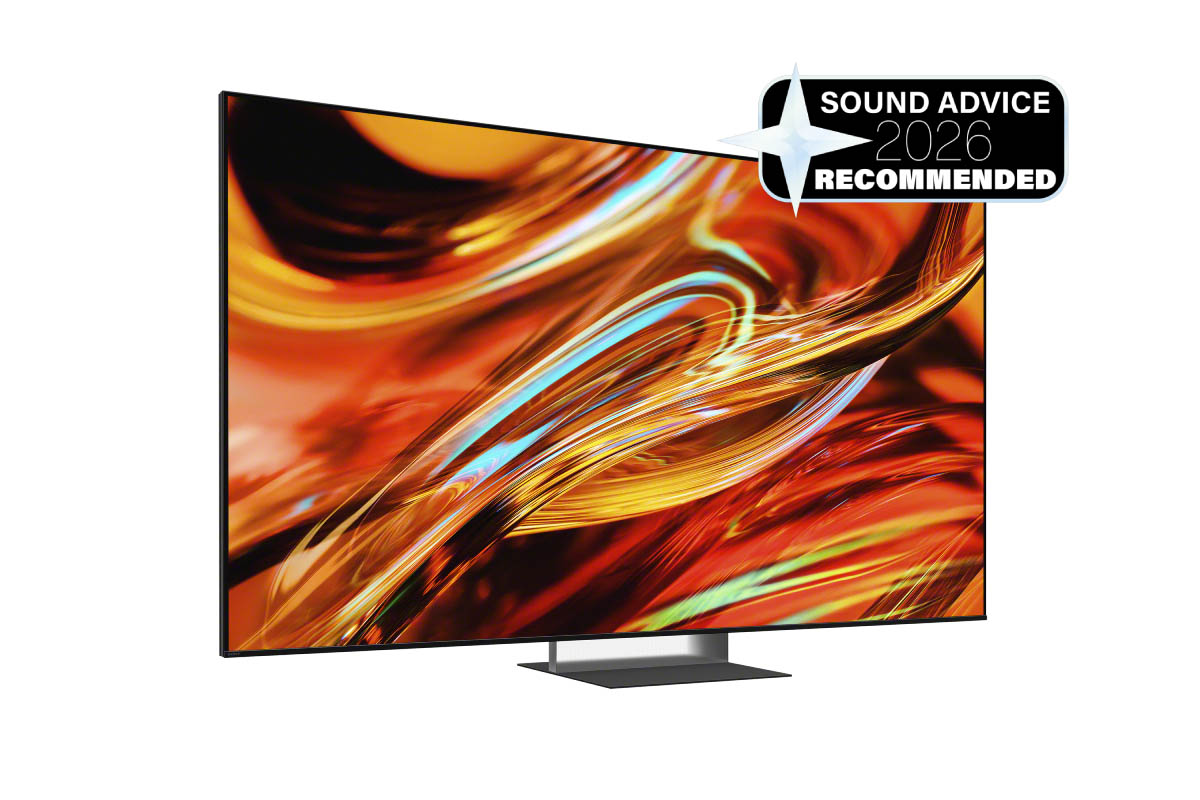
I’m testing the 65in version of the OLED+911 - it’s also available in 48in, 55in and 77in versions, although it seems the UK will only be getting this 65in model. Yes, it launched when it felt like it, yes it includes four-sided Ambilight, yes it’s packing an integrated audio system developed by Bowers & Wilkins, and yes it covers off every HDR standard, up to and including Dolby Vision 2 Max - or, at least, it will after an imminent* firmware update. And remarkably, there’s even more to it than that.
(*January 2027, apparently)
One of the very few sticks available with which to beat OLED TV technology is a perceived lack of peak brightness, and a corresponding lack of oomph where stark black/white contrasts are concerned. The 65OLED+911 uses a Primary RGB Tandem panel - and among some other advantages I will get to soon enough, this puts paid to that whole ‘lack of brightness’ thing. Measured in the most favourable conditions, Philips reckons this TV can hit a staggering 4500 nits - which is almost sufficient to cure cataracts, let alone make contrasts pop from the screen.
The panel’s four-layer structure means greater longevity as well as far greater peak brightness, wider colour volumes, and improved efficiency where power consumption is concerned. LG Display (the company that developed this panel in the first place, and from whom every TV manufacturer must source their Primary RGB Tandem panels) has upped the reflectivity-reducing potential of the panel at the same time. And the panel, which has a very acceptable native refresh rate of 120Hz, can hit 165Hz with VRR - thanks to the operating system Philips has specified and the technology it’s deployed to govern the panel.
As is generally the case with Philips TVs, format coverage is as good as it gets. As well as compatibility with HLG, HDR10, HDR10+ and Dolby Vision HDR standards (with that Dolby Vision Max 2 update to come), the 65OLED+911 can also handle Dolby Atmos and DTS:X audio content. And where gaming is concerned, Philips is now on a par with the best that LG or Samsung can offer inasmuch as every one of its four HDMI inputs is an HDMI 2.1 job that supports 4K @ 165Hz PC gaming as well as 4K @ 120Hz console capability. Add in Nvidia G-Sync, AMD FreeSync Premium, VRR, HGiG and ALLM support, HDR10+ and Dolby Vision gaming compatibility, plus eARC capability on one of those four sockets and 48Gbps on two of them, and it’s apparent Philips wants to cater to as many customers as it possibly can.
picture quality
It goes without saying that the Philips 65OLED+911 looks its best when given the best stuff to work with - which means some 4K content, ideally with an HDR element to its specification. When it’s asked to display this sort of content, this TV is almost all gain and next-to-no pain.
The Philips 10th Gen P5 AI processing engine is running the show, and it’s capable of powerfully impressive results. In ‘Reference’ mode there’s so much to enjoy - detail levels are undeniably high in pretty much every circumstance, there’s a lot of variation in black tones, the colour palette is wide-ranging and naturalistic, and that peak brightness means that white tones are punchy in even quite bright scenes - and when white exists on a black background, the contrast is as stark as you’ll ever see from a TV using an OLED panel. This TV’s dynamic range is quite something.
Edge definition is really good, and the amount of fine detail revealed in complexions and skin-tones makes for an absorbing watch. Motion control, too, is impressive - or, at least, it is once you’ve hit on the appropriate settings in the set-up menus. I notice that motion is handled impeccably during hi-def streams from Amazon Prime, but when the platform jump-cuts to adverts (which is rude, but not so rude that I’m willing to pay YET MORE money to Amazon to do away with them) the control of on-screen movement becomes quite a lot more hesitant. I am perfectly willing to put this down to the glaring difference between the standard of the main feature and of those ads, and the screen’s understandable inability to immediately compensate for the difference.
But when it comes to slow pans, the Philips is absolutely rock-solid in its grip, and it never allows any fine- or shadow detail to go astray. It’s an attentive and periodically absorbing watch.
As an upscaler the 65OLED+911 has its limits, naturally - but as long as you’re not expecting pristine images from daytime TV broadcasts the Philips is more than adequate. 1080p content retains much of what is so admirable about native 4K images, particularly the splendid colour balance and the dynamism of contrasts. Detail levels stay respectably high, too, and despite the generally vivid nature of its images the 65OLED+911 is never ‘shouty’ or overdriven. There’s a reassuring naturalness to the images it displays, a sense of insight that’s by no means a given even among the most capable of its price-comparable rivals.
Gaming enjoys all of these benefits too, and the screen’s ability to describe lighting effects, tease out the finest details in even the darkest scenes, and track motion with absolute assurance makes for a superior experience. Philips is claiming lag time of just 6m/s when gaming at VRR 165Hz, and I’ve no reason to doubt it on the basis that the gaming I do (4K @ 120Hz) enjoys input lag of around 8m/s - and it feels like it.
It’s definitely worth noting the occasional, and actually quite predictable, banding and gradation the screen indulges in when asked to deal with particularly testing scenes or moments, though. It’s apparent in scenes of almost-but-not-quite colour uniformity - a shot of the open sky, for instance, can provoke the Philips into some banding as it struggles to smoothly describe barely-there variations in colour tone. The 65OLED+911 is by no means unique in this, but I don’t want to give the impression this is a flawless TV that is beyond reproach.
Where the 65OLED+911 is unique, though - at least among its competitors - centres around Ambilight. Here it’s on all four sides of the rear of the screen - and no matter if it’s set to throw colours that mimic that of the on-screen content, or simply to offer a steady halo of light around the screen, it makes for a more immersive and a less tiring viewing experience. If you’re familiar with Ambilight then you know that what might sound gimmicky is, in fact, a very valuable feature - and if you’re not, well, it’s a very valuable feature that is not as gimmicky as it might sound.
sound quality
The Bowers & Wilkins-designed audio system is integrated into the 65OLED+911 inasmuch as it is physically connected and requires no wiring or power of its own - but visually it presents as a neat and tidy soundbar that sits comfortably against the bottom of the screen. As such it’s one of the neater solutions to inferior TV sound around - and then there’s the direct, eloquent and spacious sound it makes.
The audio system is arranged in a 3.1 -channel layout - so there are no physical drivers to create a sense of spatial audio, and no DSP attempting the same thing either. Instead you get discrete left, right and centre channels, each of which consists of a 19mm titanium-dome tweeter and 45mm glass-fibre midrange cone - they’re underpinned by a 75mm bass driver at the rear of the panel, which is assisted by a quartet of ‘push/push’ passive radiators. All-in system power is 81 watts, and there’s also the facility to connect an external subwoofer in case you find the integrated system’s low-frequency presence a little tentative.
And when compared to the sound that’s delivered by pretty much any rival of comparable size and price, the OLED+911 stands apart. Its sound is positive and distinct, with a really clean tonal balance and equally smooth frequency response. The stage it creates is wide and organised, and its projects the all-important midrange really well - voices, no matter if it’s a singer or spoken dialogue, exist in enough space in which to properly express themselves, and they are articulate and detailed. The top of the frequency range is crisp without ever veering into harshness, and there’s appreciable low-frequency punch that’s augmented by plenty of tonal and textural variation. There’s air and space to the sound, and while the system isn’t shooting for an impression of surround sound, let alone spatial audio, it sounds appreciaby wider than the enclosure it’s coming from.
living with the philips 65oled+911
For the 65OLED+911 Philips has ditched the Google TV interface that its higher-end TVs have used in the past, in favour of the Titan OS alternative its more mainstream models have featured. This is in no way a bad thing, because while it may not be quite as smooth-scrolling and solid as Google TV, Titan OS is far less pushy about the directions in which it wants to steer you. It also means the 65OLED+911 features all of the UK’s TV catch-up service and every worthwhile video-on-demand app, and there’s a Freely tuner on board too.
Navigating Titan OS and also the predictably in-depth set-up menus is done via the same remote control handset that high-end Philips TVs have been supplied with for the last few years - again, this is not a bad thing at all. Charging via USB-C means there’s no requirement for batteries, it’s not over-buttoned, and the backlighting that comes on when the handset is moved is also a nice touch. There’s also a control app, but it’s pretty bare-bones and fundamentally is a less helpful version of the remote control handset. And those who like the sound of their own voice will be pleased to find the ‘mic’ button on the remote gives access to a responsive voice assistant (although the non-Google interface means Google Assistant, if that’s your preference, is only available via an appropriate smart speaker).
The menus themselves might go on a bit, but mercifully it’s possible to extract the vast majority of potential performance from the 65OLED+911 without spending half a day in sub-menus and/or paying for someone to calibrate the TV (although obviously both of those options are available to you). ‘Reference’ mode (which is the setting Philips suggests is closest to the content creator’s intent, following its abandonment of ‘FilmMaker’ mode) is probably the most pleasing out-of-the-box setting, but you should be able to find the balance you prefer (along with the most convincing motion-handling and what-have-you) without driving yourself too far towards distraction.
The screen has a very effective antireflective treatment which somehow manages to minimise most reflections while still allowing black tones to look deep and glossy. It’s worth bearing in mind that the screen is glass rather than plastic, so a degree of care regarding its position relative to bright light sources is in order. Happily, though, you have to sit quite radically off-axis before any overt change to colour, contrast, black levels and so on is apparent.
As is only right and proper when you’re spending good money on a new TV, the 65OLED+911 is built and finished to an extremely high standard. Those who fancy wall-hanging their telly will be encouraged by the slim, consistent 45mm depth, and those who intend to put their telly on a surface will be pleased to find the feet aren’t too far apart. And it’s worth noting the confidence of the branding here - one of the slender little feet carries the word ‘Philips’, the other the words ‘Bowers & Wilkins’, and that’s the lot.
conclusion
Let’s be honest - if you have £1999 or so to spend on a new 65in television, you are going to have to work very hard to buy something that isn’t, at the very least, really good. The state of the art has never been more impressive - but with the 65OLED+911, Philips has delivered a really good TV that not only sounds much better than the norm but also features the eyestrain-reducing, image-size-increasing Ambilight. Is it perfect? No, but then none of its obvious rivals are perfect either. Is it a compelling option? You bet your boots it is.
testing notes
Gran Turismo 7 Sony Playstation 5
A vibrant, extraordinarily wide-ranging palette of colours, brilliantly subtle and convincing lighting effects, rock-solid motion control and infinitesimal lag make the visual side of this console classic look as good as it ever did. The audio system, meanwhile, makes the differences in engine note from car to car absolutely obvious.
Night on Earth Blu-ray
As a showcase for the Philips’ upscaling abilities (this is a 1080p render) as well as its abilities where contrast, black tone variation and edge definition are concerned, this disc - the film is one of director Jim Jarmusch’s finest moments - is among the best around. The moodily clattering Tom Waits soundtrack is a stern test of audio separation and fidelity, too.
Night on Earth Netflix
Routinely held up as THE showcase for the advantages of a premium Netflix subscription thanks to its glorious Dolby Vision-assisted picture quality and gently compelling Dolby Atmos sound, this wildlife documentary is made even more immersive thanks to its full-frame presentation.
You buy a Philips 65OLED+911 for quite a few different reasons. The general excellence of its picture quality, for one, and the fact it’s one of the few TVs around that have an audio system that is entirely fit for purpose. Then there’s the splendidly straightforward operating system, the unique Ambilight feature, the slender proportions… you’re not short of choice if you want to spend around £2K on a 65in TV, but whatever you do don’t spend it before you audition the 65OLED+911.
For once, here’s a TV that doesn’t automatically demand you spend more money on a soundbar - and if you are doing the right things where your VOD subscriptions are concerned too, then it should be simple enough to exploit the full audio/video excellence of the 65OLED+911. Nevertheless, a dedicated 4K Blu-ray will allow the Philips to give you everything it’s got, and if you’re even remotely interested in gaming then hooking up your PC or console will let you see (and hear) those games in a whole new light.