Award winner
Find at
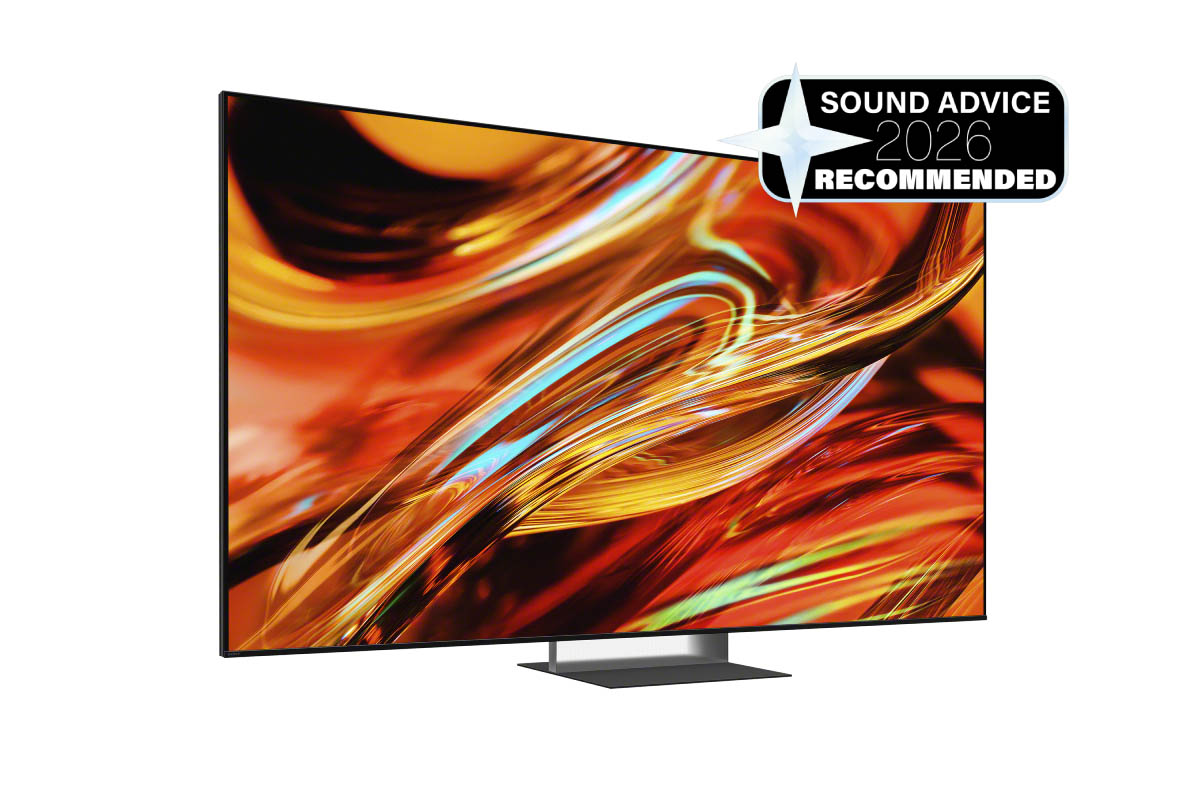
The 65in Bravia 7 II (also known more boringly as the K65XR75) sees Sony venturing into TV pastures new, with a screen technology called ‘True RGB’. This is Sony’s immodestly named take on the RGB LED approach to LCD TVs (Samsung and Hisense managed to sneak out a couple of super-sized (and super-expensive) versions last year), and which is enjoying a much wider and more affordable distribution across the ranges of various TV brands for 2026.
While the core tech at the heart of the Bravia 7 II might not be totally unique, though, the Bravia 7 II is the first RGB LED TV Sound Advice has tested - and the ‘True RGB’ name Sony has given it suggests the Japanese marque is feeling pretty confident about it. So let’s find out what all the fuss is about.
Picture quality
The ‘next gen’ thing about True RGB (and most other takes on RGB LED technology) is that instead of shining a white (or blue) light through layers of colour filters (or Quantum Dots), colour is generated by actual red, green, and blue LEDs. This has the potential to deliver more brightness more efficiently, as well as levels of colour volume, range and accuracy the likes of which the TV world hasn’t seen before.
These are all advantages you can understand Sony being particularly keen to get involved with, given the brand’s constantly stated desire to make TVs capable of delivering pictures that tally as closely as possible with those being produced by content creators on the brand’s 4000-nit BVM-HX3110 professional mastering monitor. Especially as RGB LED appears relatively affordable compared with many other new TV technologies we’ve seen over the years - the 65in Bravia 7 II, for instance, costs a far from unreasonable £2299.
As you might then surmise, the Bravia 7 II isn’t Sony’s flagship True RGB range. That honour belongs to the upcoming Bravia 9 II - this range will provide more local dimming zones, more brightness and a new anti-reflection screen filter. But the Bravia 7 II is still premium enough to share such features as Sony’s latest, True RGB-optimised, XR processor, ‘Triluminos Max’ colour engine, smooth colour gradation technology, contrast booster (which redirects power from dark areas where it’s not needed to bright areas where it is) and ‘X-Wide Angle Pro’ technology for wider viewing angles than LCD TVs normally provide.
Looking first for where the True RGB system makes a difference, the 65in Bravia 7 II’s colours are truly gorgeous. Provided you avoid the ‘Vivid’ preset (which seems the result of some sort of tech demo fever dream), Sony’s debut True RGB TV delivers relatively pure, bright primary and secondary colours with a vibrancy, but also naturalism, I haven’t seen from any Sony LCD TV before - including the original, ground-breaking, Bravia 9. This richness and purity of the most vibrant colours holds up in the brightest HDR picture areas in a way it just doesn’t with regular LCD screens.
Once I stop drooling over this most obvious True RGB strength, I also start to notice how incredibly subtle, balanced and authentic less aggressive colour tones look. Skin tones, in particular, look fantastically believable no matter the lighting conditions in which they appear, thanks to the TV always judging the tone perfectly and avoiding any of the plastickiness or blotching that can occur with TVs that struggle to resolve subtle colour tone gradations.
The Bravia 7 II’s colour finesse means colour banding is now gone from all the HDR movie shots in which I usually see it, while colours maintain their presence and natural tones even in dark shots and avoid the desaturation that can affect both LCD and OLED rivals. The Bravia 7 II’s exceptional colour performance is backed up handsomely by other aspects of the picture performance, too. In particular, the local dimming engine proves almost outrageously good for what is, after all, Sony’s step-down True RGB series. It produces completely convincing and compelling black shades, for starters, while simultaneously ensuring that no subtle details are crushed out in the darkest corners. There’s no trace, either, of any detail in dark backgrounds looking coarse or unstable. And perhaps most remarkably of all, despite apparently having only 432 separate dimming zones to work with, backlight blooming around stand out bright objects seems almost non-existent.
I say ‘seems’ here because, if you really look hard for it, you can sometimes see faint haloing around particularly bright highlights. The RGB LED lighting means, though, that the colour tone of this faint blooming actually tracks the colour of the ultra-bright object causing it, making it much less noticeable than the white or grey blooming associated with standard LCD TVs. In fact, for the vast majority of the time your eye just perceives this colour blooming as a natural artefact of the way your eyes work rather than a limitation of the TV.
The backlight is ultra-stable too, never succumbing to obvious brightness jumps during cuts between light and dark shots or suffering with distractingly obvious local dimming zone handovers as bright objects move around the screen. And the Bravia 7 II’s colour finesse and outstanding light control join forces with the purity of Sony’s XR image processing (or the astuteness of its ‘Reality Creation’ processing when emphasising picture sharpness) to deliver images that look beautifully sharp, deep and dense.
Trying to find anything negative to say about the Bravia 7 II (aside from the crazy ‘Vivid’ mode), I’d suggest, even with its eco and ambient light adjustment features turned off, it’s not a super-bright TV compared with what some other brands - most notably TCL - are doing for similar or even less money. But the 65in Bravia 7 II’s brightness is plenty for convincing HDR and, more importantly, feels perfectly suited to other aspects of its image makeup - particularly its local dimming system.
Sony’s new AI-backed default motion processing system can cause some noticeable motion glitches, as well as very occasionally generating a weird blurring problem that can leave some dark shots looking almost out of focus for a moment. So you should either turn motion processing off, or choose a custom setting and adjust the three motion compensation elements to a level no higher than ‘1’. The stunningly watchable ‘Standard’ preset also occasionally throws up a momentary fuzzy-looking rough grey image as images reappear after a fade to black.
While the 65in Bravia 7 II’s colours are mostly exceptional, I spot a single error - the pinky-red of the ‘Replicant’ and ‘Blade Runner’ words in the opening background-setting text of Blade Runner 2049 take on a brown tone when they appear, briefly, by themselves without the rest of the white text beside them. I can’t pretend I see similar colour errors at any other point with real-world content. Motion looks a touch softer than it does on Sony’s OLED TVs and on previous Bravia 9 and Bravia 7 models, and dark test screens can reveal slight instability in dark areas. Crucially, though, I don’t see evidence of this in real-world content (unless I watch the TV from a pretty wide angle).
Almost all of the issues listed above, though, either only impact quite specific room conditions/tastes, or else can be worked around in the Bravia 7 II’s menus. Which means that it only takes a minimal amount of effort to achieve arguably the most immersive, subtle and authentic images I’ve seen from a midrange LCD TV.
Sound quality
For the most part, the Bravia 7 II gets good mileage out of its 2.2-channel, 40W speaker system. It particularly enjoys Dolby Atmos and DTS:X soundtracks, revealing impressive power and volume handling for an integrated TV speaker system. It can develop a soundstage spreading far beyond the TV’s bodywork - upwards, as well as to both sides. Sound effects are placed with decent accuracy within this stage too, and detail levels are high.
The available dynamic range is above par by midrange TV sound standards too, as the dual subwoofers inject richer, deeper low frequencies into action scenes than you usually hear. Bass typically remains distortion-free and uncompressed, even at high volumes, which instantly gives sound a more cinematic impact than TVs usually achieve. Only the truly extreme bass drops of Blade Runner 2049’s opening moments cause a mild crackle alongside the throbbing bass.
Treble can become a little too bright, though, occasionally causing harshness or what should only be ambient sounds to become a bit too prominent in the mix. The only other issue is that while vocals are clear and well placed, male speech can sometimes sound a little too heavy and ‘thick’.
Living with the Sony Bravia 7 II (K65XR75)
The Bravia 7 II is a bold addition to your living room. Particularly eye-catching is the apparently see-through panel that slides into the neck of the TV’s centrally mounted stand - it creates the impression you’re looking right through the TV at whatever’s beyond it, but uses a clever lenticular lens arrangement to make any cables that might be running into the TV magically disappear. A distinctive double-layer effect on all four of its edges, meanwhile, enables the 65in Bravia 7 II to make a virtue out of its relatively deep rear by modern TV standards.
While the Bravia 7 II’s suite of connections will be good enough for most households, serious gamers should note that only two of its four HDMI ports support 4K @ 120Hz refresh rates. Sony’s first 2026 TV takes a respectably swift 10.3ms to render 1080p 60Hz graphics, though, and can share its model details with PlayStation 5 consoles to help the console automatically select the best HDR settings to use.
The Bravia 7 II is built on the Google TV smart operating system - this brings with it a huge wealth of apps, including the BBC iPlayer app that’s usually a blindspot in with Google TV. Sony’s exclusive ‘Sony Pictures Core’ service is available, too - it uniquely provides high-bandwidth streaming rates of up to 80Mbps to anyone with fast enough broadband, and just by buying the Bravia 7 II you earn yourself 10 free movie purchases.
The Somy also carries a new ‘My Cinema’ menu system that essentially provides a series of themed macro settings where you can set up your own picture and sound preferences for different types of content or room conditions. And one last useful (and very Sony) feature of the Bravia 7 II is its selection of ‘Calibrated’ presets specially designed to match the mastering approaches of Netflix, Amazon Prime Video and Sony Pictures Core apps.
Verdict
While the 65in Bravia 7 II perhaps doesn’t deliver the sort of instant brightness-driven impact some rival big-hitters are serving up in 2026, it doesn’t take long before its deeper, subtler, more cinematic charms make their presence felt. There are showier LCD TVs around this year, but I’ll be shocked if2026 gives us any that are more immersive, nuanced and obsessively focussed on creative intent than Sony’s True RGB debutante. Unless it’s Sony’s own Bravia 9 II…
Test samples
It Chapter One 4K Blu-ray
While ultra-dark scenes in It (like Georgie’s opening visit to his scary basement) brilliantly reveal the quality of the Bravia 7 II’s local dimming engine, the 4K disc’s opening static title image, with its rich yellow and red elements, actually does a great job of revealing both the purity of the True RGB panel’s colours, and the benefit of backlight haloing adopting the colour of the bright object that’s causing it.
Blade Runner 2049 4K Blu-ray
The huge dynamics of BR2049’s Dolby Atmos soundtrack are generally handled well by the Sony’s speaker system. It can go loud enough, and the soundstage can spread wide enough, to capture that sense of being overwhelmed by an epic industrial dystopia.
Exodus: Gods And Kings 4K Blu-ray
There’s a scene in Ridley Scott’s biblical epic where a frustrated Moses throws his sword into the Red Sea at dusk - it causes colour banding issues, to some extent, on almost every TV. Everything looks perfectly blended and smooth on the Bravia 7 II, though - and the TV even gets the scene’s tricky colour tone bang on too.
The 65in Bravia 7 II gives you affordable access to the considerable joys of Sony’s new True RGB technology. It also produces some of the most consistent, refined, balanced and flat-out immersive pictures you’ll ever see, despite its midrange positioning. Even its sound is better than that of most rivals, while its smart system covers every streaming service most households will ever need.
Sony’s latest premium TVs feature new ‘Direct Connect’ technology, letting them partner directly with a variety of optional extra speakers. So I’d recommend adding a pair of Sony’s Bravia Theater Rear 9 rear speaker options for a full surround experience.
Adding a PlayStation 5 is also a great shout, given the Bravia 7 II carries a couple of PS5-specific features - including auto HDR optimisation. If you get a PS5 with a built-in disc drive you’ll also be able to use it as a 4K Blu-ray player - something else a TV this good deserves to be partnered with.