
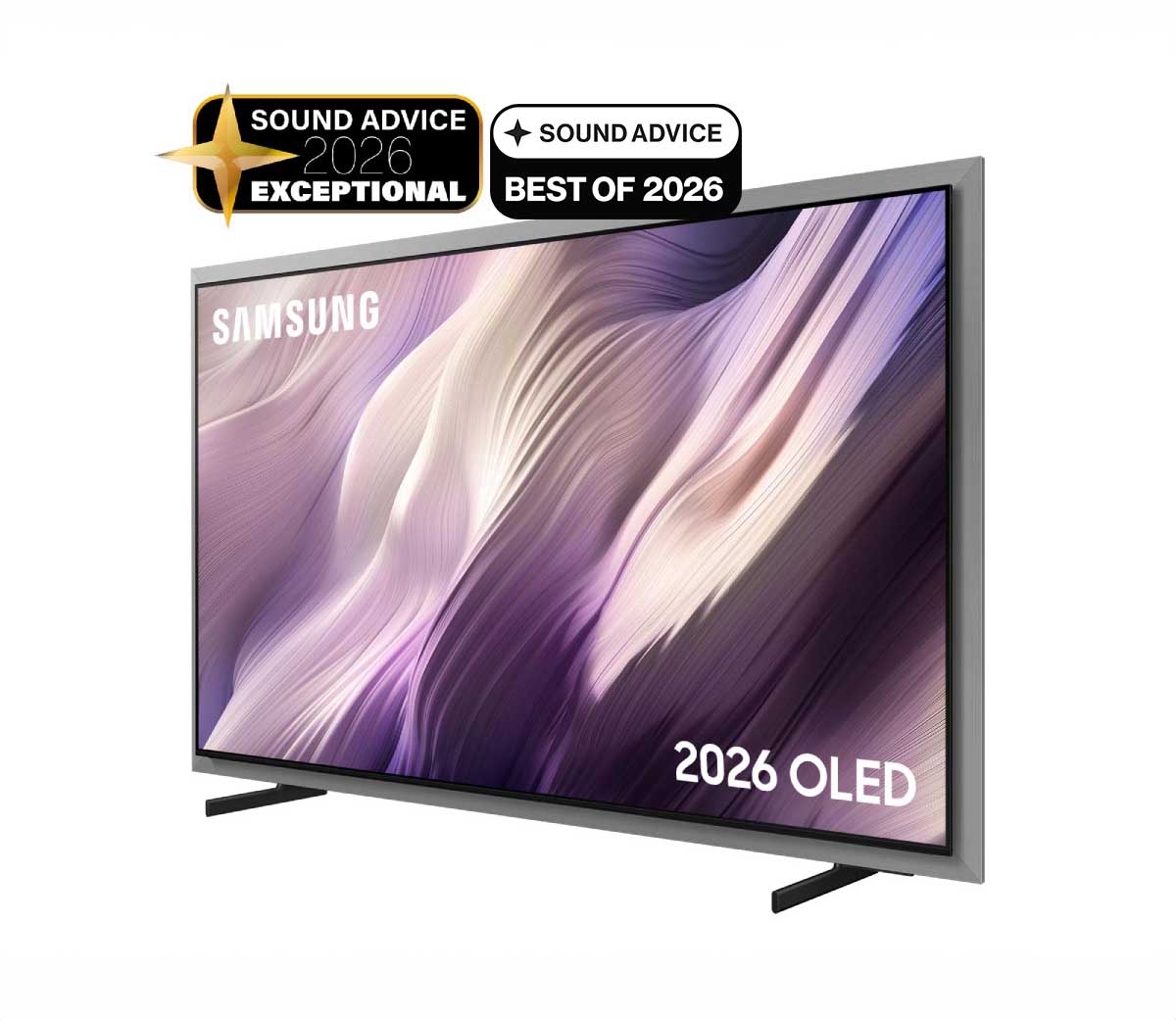
Award winner
Find at

Micro RGB technology - also known, depending on what brand you are, as RGB LED, RGB MiniLED, Mini RGB and True RGB - is the big TV tech story for 2026. Having only appeared on a couple of supersized, super-expensive TVs in 2025, its approach of using separate red, green, and blue LEDs to light pictures rather than the traditional white or blue lights shone through colour filters is set to appear in multiple mainstream TV series from pretty much every major TV brand in 2026.
The first of these brands to get a mainstream Micro RGB TV out of the gate is Samsung, with its R95H series. And so far as we’re aware, we’re the first review site to get our hands on a sample of the likely most popular, 65-inch model. Will it live up to the hype, or is it merely another case of new technology for new technology’s sake?
Picture Quality
It’s rapidly apparent that the £3399 65R95H’s take on Micro RGB technology, at least, represents genuine progress for the LCD TV world - and not just in the colour area where we might have expected it. In fact, while its colour range and volume instantly make an impact, my actual favourite things about the TV ended up being its handling of dark scenes and contrast.
The 65R95H benefits from both a regular local dimming system, where groups of LED clusters can output independent brightness levels at any given moment, and a second level of light control afforded by its use of individual red, green and blue LEDs. Put all this under the outstanding control of Samsung’s new Micro RGB AI Engine processor, and you end up with, for my money, the best all-round black colours and dark scenes the LCD world has given us.
This applies to the depth of black colour the set can achieve; how little dark scenes are blemished by common backlight nasties like blooms of light around stand-out bright objects, and how little the 65R95H falls prey to dimming zone ‘handovers’ as light objects move around a dark background.
This is all achieved, too, while typically maintaining excellent levels of shadow detail in dark areas. Dark scenes often look pretty much OLED like on the 65R95H, while at the same time it’s doing at least a couple of things that OLED TVs can’t. Namely, retaining almost 700 nits of brightness even with full-screen bright HDR content, and, as billed by every Micro RGB/Mini RGB proponent, boldly going in colour terms where no TV has gone before.
The 65R95H’s impressive and strikingly clean black levels are achieved despite the screen also managing to be extremely bright. It peaks at almost 2,300 nits, in fact - a very high, HDR-friendly number for an LCD TV that’s also capable of delivering the sort of outstanding black levels and dark scenes I’ve just described.
If you like putting numbers on things, the 65R95H’s colour talents see it capable of covering a remarkable 149% of the DCI-P3 colour spectrum used in most current HDR mastering. Samsung’s mesmerising flagship OLED TV, the 65S99H, ‘only’ covers 100% by comparison.
The Standard picture preset unlocks much of the potential of this colour spectrum, amping pictures up in the colour department like they’ve never being amped before. The results remarkably don’t typically feel gaudy or cartoonish, though, thanks to the way they’re typically delivered with excellent balance, in the sense that no tones look excessively bold against any others, and there’s also oodles of tonal subtlety to see despite all the extreme vibrancy.
A certain type of AV enthusiast will probably be hyperventilating by now at the thought of just how far the 65R95H diverges in its Standard preset from the much flatter, less saturated look films and TV shows are currently typically crafted in. All I can say is, though, that accurate or not, the 65R95H’s Standard preset is phenomenally easy on the eye - and anything but the gaudy, over-ripe mess you might have expected from a TV that combines such an extreme colour gamut with so much brightness.
This is very important, because if Samsung’s ‘expansion’ of the colour palette had not worked so well, I might well have come away from the 65R95H scratching my head over what the point of having so much extra colour to play with might be when there’s no content around that can make use of it.
While the 65R95H can certainly showboat, Samsung has these days become highly aware of the importance of catering for AV purists, even on its most extreme screen hardware. So it’s a relief to find that even on the 65R95H, the Filmmaker Mode picture preset reins the screen’s capabilities in as far as necessary to achieve results for almost every objective SDR and HDR colour and greyscale test that stayed under the level where discrepancies from mastering standards might be noticeable to the human eye.
Achieving this accuracy does mean that Filmmaker Mode pictures look both much duller and much less richly saturated than the Standard mode images do. But if that’s the price of accuracy, so be it. What matters is that the 65R95H has settings that both show off what the panel can do without losing the plot, and can switch to ‘as the director intended’ accuracy on serious movie nights.
The only definite suggestions I’d say that you could make to improve picture quality beyond the impressive default presets would be a) that you make sure all of the TV’s energy-saving features are turned off and b) if watching in Standard mode, go into the 'Picture Clarity' mode and choose a Custom setting with the judder and blur elements turned to level four or five, and noise reduction turned off.
The 65R95H’s pictures are richly detailed and sharp with both native 4K and upscaled HD images, and finally Samsung has even managed to make a decent fist of a new HDR remastering option for converting SDR to HDR.
There are also a few picture issues, inevitably. The Standard mode can go a little far at times, particularly when it comes to skin tones in warmly toned dark scenes. Its amplification of colour can slightly over-exaggerate subtle colour differences too, as can be seen with the greenish and reddish tones that infuse the LA ‘smog’ scenes in the city in Blade Runner 2049.
Motion looks a little soft compared with Samsung’s OLED or regular MiniLED TVs for some reason, and shots containing stand out areas of intense colour can exhibit ‘colour bloom’, where you get a small halo of light around stand-out colourful objects that tracks those objects’ core colours. So if a bright red object appears against a dark background, a halo of reddish light will appear around that object.
This unique feature of RGB LED-type TVs, though, is actually much less noticeable than the usual white bloom effect you get with standard LED TVs. For much of the time your eye just interprets the coloured bloom as ‘natural radiance’ rather than an unwanted backlight artefact.
Sound Quality
The 65R95H’s audio is delivered by a premium version of Samsung’s Object Tracking Sound system, where multiple speakers ranged around the TV’s bodywork combine with psycho-acoustic processing to make sound effects in even complex Dolby Atmos soundtracks appear as if they’re coming from exactly the right place on the screen.
Happily, the 65R95H’s OTS+ system does exactly as billed, delivering a busy, well-balanced and substantial sound stage into which audio effects - including those that track multiple noise making objects at once - are placed with genuinely startling accuracy at times.
Add to this the speakers’ ability to project sound quite forcefully beyond the physical confines of the TV’s bodywork; decent volume levels; a dynamic and reasonably expansive mid-range; and crisp but harshness-free treble handling and you’ve got an unusually immersive soundstage by built-in TV audio standards.
The only niggles are that you need to turn the TV’s 'Amplify' feature on to get movie-friendly volumes, and that the speaker system can succumb to crackles and distortions during sustained deep bass sounds.
Living with the Samsung 65R95H
The 65R95H is a very sleek addition to your living room. Its bezel is exceptionally narrow, its sides are finished in an attractive silvery metal, and the set’s rear protrudes impressively little for a TV that’s using Mini LED backlighting.
The screen sits on a narrow central desktop plate-style stand, with a cunning reflective neck that creates the impression that the screen is somehow floating in mid air. This stand simply slots on, too, without any screws.
The centrally placed stand means you don’t need a wide bit of furniture to sit the TV on (you can also wall mount it, of course), while a remarkably effective anti-reflection screen means you can place the TV pretty much anywhere you like without having to worry about onscreen reflections. This filter can cause the screen’s otherwise impeccable black levels to reduce a bit in really high levels of ambient light - but this issue is actually disguised by the levels of light that cause it.
The 65R95H also supports wider viewing angles than most LCD TVs without colour or contrast being compromised, further aiding its placement flexibility. The only thing you might notice if you have to watch the TV from down its sides is that the otherwise superbly controlled backlight haloing becomes more noticeable.
The 65R95H’s connections are ground-breakingly good. For as well as giving you four HDMI 2.1 ports and two USBs on the TV itself, Samsung also sells an optional external wireless connect box that adds a further four HDMIs, bringing the HDMI total to an unprecedented eight. This Wireless One Connect box also means you can connect external sources to the TV without running cables directly into the TV, enhancing its minimalistic design.
Gamers will be delighted to hear that all eight of the 65R95H’s HDMIs are capable of handling cutting edge gaming features such as 165Hz refresh rates, variable refresh rates and high dynamic range video. Though gamers should note that the four HDMIs on the TV take around 20ms less to deliver their content to the screen than those on the wireless box.
Smart features on the 65R95H are delivered by the latest heavily AI-influenced version of Samsung’s Tizen operating system. This has been given a subtle but effective design clean-up, and introduces a new AI home screen where you can access features that include both the Co-Pilot and Perplexity AI engines. All addressable, of course, via Samsung’s Bixby or Alexa voice recognition systems.
The 65R95H is cleverer about recommending relevant content based on your viewing habits than most TVs, and can do this over numerous different individual user profiles. It can also play content from the many sources Tizen supports in the HDR10, HDR10+, HLG and new HDR10+ Advanced formats, but not Dolby Vision.
One last handy little feature of the 65R95H is that its small ‘smart’ remote control carries a solar charging panel, so you’ll never need to replace its batteries.
Conclusion
Before living with the 65R95H, I’d wondered both whether Samsung could really nail a new technology at the (almost) first time of asking, and whether Micro RGB’s expansive colour talents were really necessary in today’s content world. Happily the answer to both questions is a resounding ‘yes’, leaving me pretty convinced that I’ve just been looking at the future of LCD TV.
Watching notes
Blade Runner 2049 4K Blu-ray
The smoggy cityscapes and explosive neon signage of Blade Runner 2049’s dystopian but also weirdly beautiful vision of a futuristic Los Angeles provide a dazzling demonstration of what the 65R95H’s high brightness and huge colour range can do. Though it can also occasionally show up relatively small unique Micro RGB issues too.
Forza Horizon 5 Xbox Series X
Few games are as consistently beautifully detailed and vibrant as Forza Horizon 5, and the game has never look more consistently spectacular than it does on Samsung’s new Micro RGB TV.
The Greatest Showman 4K Blu-ray
As you’d hope of a film about one of history’s most shameless showmen, The Greatest Showman features some spectacularly colourful and contrast-rich visuals - which the 65R95H’s Standard preset manages to ‘expand’ to an unprecedented degree without the results often looking overblown or unnatural.
The 65R95H boldly takes colour where no TV has taken it before, as a gamut almost 50% wider than the DCI-P3 system used for HDR video infused with well over 2,000 nits of brightness lights up your AV life like no screen before. Samsung’s S99H OLED TV delivers pixel level light control, even more accurate Filmmaker Mode pictures and higher peak brightness, but it’s duller with full-screen bright HDR content and doesn’t reach the same colour range.
If you have an unusually extensive collection of external HDMI sources, you should consider adding the optional Wireless One Connect box to the TV. This box also lets you minimise the number of cables running into the TV if that’s helpful to you.
The 65R95H sounds pretty good by itself, but as with any TV its sound can be boosted by adding a good soundbar. Samsung’s own HW-Q990H soundbar would make a particularly excellent partner, thanks to both its 11.1.4-channel full surround sound capabilities, and its compatibility with Samsung’s Q Symphony feature, where the TV’s sound joins forces with the soundbar rather than the soundbar just taking over and leaving the TV mute.
A TV as HDR friendly as the 65R95H needs to be fed as many HDR sources as possible. So if and when finances allow, add a 4K Blu-ray player, Sky Stream or Sky Q box, and PlayStation 5 or Xbox Series X games consoler. And be sure you subscribe to the 4K HDR tiers of streaming services if you can afford that, too.
.webp)
