
Award winner
Find at
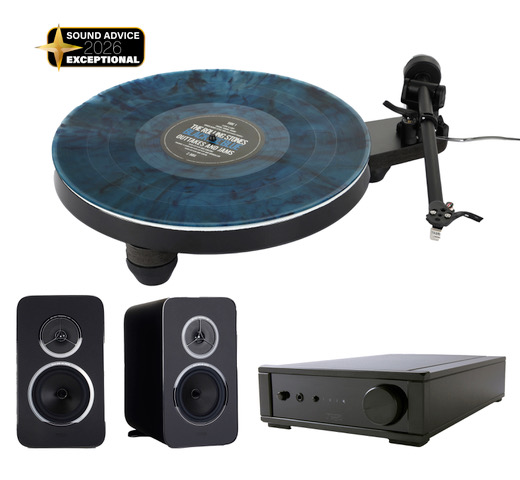
The arrival of Rega’s new budget turntable, the £259 Replay, may have come out of the blue, but it’s worth noting the Southend, UK -based company has previous form here. Its Planar 1 was launched in 2016 at £250, complete with cartridge and everything you needed to make it plug-and-play.
Mind you, there’s been a lot of water under the bridge (or maybe Southend Pier?) since then. 2016’s £250 is the equivalent of about £360 now, which is just a little more than the current iteration of the Planar 1 will set you back - and now the market seems to be full of similar turntable packages, with models from the likes of Audio Technica, Denon, Sony and many more sitting in the sub-£200 arena. And old rival Pro-Ject squares up to the Replay with its entry-level E1.2 turntable, selling at £10 more than the Rega.
So by any standards, slipping in an even more affordable model beneath what for many years has been its benchmark ‘beginners turntable’ is a bold move for Rega. But there’s rather more to the Replay than simply keen price: this may be a purist (for which read ‘no frills’) turntable of the kind Rega has made for yonks, but it’s not simply a stripped-down version of the existing Planars.
The company refers to this as a completely new design, developed over three years, and designed to ‘remove all the paranoia and confusion’ from playing vinyl for first-time converts to records. To that end, even the simple set-up required by some ‘easy’ turntables has been done away with: unbox the Replay and all you need do is remove some cardboard packing from under the sub-platter, then drop on the platter and mat on which the record sits, and fit the counterweight to the rear of the arm carrying the pickup cartridge.
Even this last bit, which can sometimes involve a bit of faffage on some turntables, is simplified. The cartridge is pre-installed and aligned, so all you have to do is push the counterweight onto the rear of the arm as far as it’ll go, and you’re done. Connect the turntable to the phono inputs on your amplifier, plug it into the mains via the power supply provided, and play records. Ten minutes max from box to spinning the first disc, even if you’re as fumble-fingered as me.
There’s no need to get all tech-y here - but should you want to know more, here goes. The Replay uses a skeletal chassis, as found on more upmarket Regas, in place of the solid rectangular assembly of the Planar 1, and is driven by the company’s 24V AC motor. You can change the speed from the default 33rpm for LPs to 45rpm for singles, but this involves lifting off the main platter and moving the drive belt down onto the larger diameter of the pulley located on the motor.
The power switch is to the rear, beside the input for the power supply, the tonearm fitted is Rega’s RB110, which has a lift device to place or remove the stylus in the groove, and the Rega Carbon cartridge has a slip-on stylus protector. It can be upgraded at a later date by fitting the Carbon Pro stylus assembly, which will set you back £35.
Finally, a Z-type lid is provided, formed from folded acrylic. This locates onto the same stub at the centre of the platter as is used for records, and covers the platter and arm. It’s simple but effective, and of course must be removed when using the turntable.
SOUND QUALITY
How well the Rega system works together is the main story - but when the Rega system arrives I have a pair of Fyne Audio’s excellent Cubitt 5 active speakers on hand. Naturally I give in to temptation and plug the Replay into those speakers’ moving magnet phono input.
The result? Far beyond my expectations of a swiftly lashed-up system. The Fyne speakers are weighty, detailed and deliver a superbly focused soundstage, and the Replay makes the most of all those strengths. Suddenly I’m hearing my treasured, if neglected, albums sounding better than I ever remember them being. From classical orchestral works to mainstream rock albums, there’s just so much information, and it’s presented as a convincing musical whole that takes me back to when I first played some of these albums decades ago.
Switching to the full three-part Rega system, though, it’s clear that much of this overall character is coming from the Replay - it’s simply flowing through the clean signal path afforded by the io amp and Kyte speakers. There’s no need to make any allowances for the relatively budget nature of the set-up, the modest power output of the io, or the compact dimensions of the amp and speakers. The presentation of the Rega set-up is confident, substantial and involving, and the synergy of the three components is palpable.
What’s more, the usual hi-fi niceties are observed - surface noise, for instance, is well suppressed by the Replay, which also shows impressive speed stability with that sternest of tests, solo piano. This means minimal rumble, hiss and crackle, while piano notes land solidly and decay naturally, with no hint of wavering pitch on sustained chords.
And above all, this system more than hints at that magic we all hear the vinylistas bang on about all the time: the sound of the needle hitting the groove, that of-a-piece and – OK, I’ll admit it – analogue sound, and of course that whole ritual of unsleeving the record from packaging you can actually read without a magnifying glass, placing it on the turntable and playing it. Yes, a whole side, all the way through, without track-skipping, as it was meant to be heard all those years back, when bands and producers programmed their music to fit the limitations of the medium.
Yes, there are downsides – the need to turn the record over in the middle of a long classical piece, let alone having a major work split over multiple sides rather than simply playing through, and of course those scratches, captured for all time to remind the listener of a distant moment of carelessness.
But the magic more than outweighs the drawbacks, and while I’m not about to abandon my CDs, servers or streaming services and go back to an all-analogue world, the Rega Replay – and the system I’ve built around it here – makes a strong case for the ongoing interest in playing records rather than just listening to music. Anyone taking their first steps into buying and playing vinyl, or perhaps just exploring an inherited collection of those big, colourful sleeves and their contents, won’t go far wrong here.
LIVING WITH THE REGA REPLAY / io / KYTE
I may not be the vinyl virgin at whom Rega is targeting the Replay, but it’s been so long since I played LPs in my system that I might be considered a record revenant. And to be fair, despite having a decent collection of what my Japanese friends used to call ‘black discs’, it was all the fiddling and faffing that put me off. Yes, I know some of my reviewing colleagues seem to take pleasure in all the miniature fixings and minute adjustments involved in setting up a turntable, but I’ve always viewed all that as being on a par with building a model of HMS Victory from matchsticks – I just wanted to get on with enjoying my music.
So yes, perhaps the Replay really was designed for me - and setting it up with the 30 watts-per-channel io amplifier (yours for £440) and the little Kyte speakers (£399 per pair) couldn’t have been much simpler.
The io shares its moving magnet phono stage and power amplifier section with Rega’s rather more spendy Brio mk7 amp, and again is an object lesson in simplicity - it has two sets of line-level analogue inputs alongside that phono input, will drive a single pair of speakers, and has a headphone output driven from the main amp section. Volume control, buttons to select the input (all duplicated on the remote handset) and that’s it - all in a compact box just 18cm wide.
And the truly tiny Kyte speakers are similarly – well, different. Like the rest of the system they’re made in the UK by Rega, and they use a thermoset plastic material for the main cabinet. It’s cross-braced inside and with internal ceramic plates for rigidity, while the drive units are mounted in a wood-composite front baffle. Those drivers are a 125mm mid/bass unit made in-house, there’s a 19mm tweeter for the treble which is made to the company’s specification, and the speaker has a detachable rear foot enabling it to stand square-on or with a slight upward tilt.
The speakers come in any colour as long as it’s black, have the matt finish of the material from which they’re made, and stand just 32.5cm tall. Connect the Kyte and the Replay to the io, and the whole system works splendidly.
CONCLUSION
Rega’s been doing things its own way for more than half a century, and the evidence that it very much knows what it’s doing, and understands its market, is as clear in its continued expansion as it is in the specifics of this system. Rather than following market trends, the Replay / io / Kyte ensemble shows the company’s commitment to specialist materials, tight engineering tolerances and accuracy, all in the quest for better performance.
That means the components here don’t just look different, they come together to create a great-value system with its finger on the pulse of what newcomers to vinyl replay are after, without all the complication likely to dissuade the faint-hearted.
As easy to set-up and use as any plug-and-play mini-system, and requiring minimal knowledge to go from a small pile of boxes to playing and enjoying records, this set-up is quirky, agreed - but for sound engineering reasons. And above all, it’s both great fun and excellent value for money.
Listening notes
Kate Bush All We Ever Look For
An introspective track from 1980’s Never for Ever, with Bush’s voice showcased against typically quirky instrumentation as part of an album that begs to be listened to LP-style: all the way through
Kirsten Flagstad / Vienna Philharmonic / Sir Adrian Boult Mahler: Kindertotenlieder
At once tender and dramatic, with Flagstad and the orchestra both on superb form in this wonderful Decca recording heading for its 70th birthday, full of power and fine detail
Roxy Music For Your Pleasure
Not for Roxy Music that difficult second album syndrome. On this 1973 release every element of the band’s sound came together, from Bryan Ferry’s crooning voice to Phil Manzanera’s guitar and Eno’s electronic weirdness. It’s another ‘play it straight through’ delight
You buy this one-make three-part system for tangible and intangible reasons. It's compact, well-made and easy to use - even a novice will be up and running in no time. It's built to last and it looks the part. But primarily you buy it because it explains exactly why the vinyl format has endured all this time - its sound is comfortably disproportionate to its asking price.
