Award winner
Find at
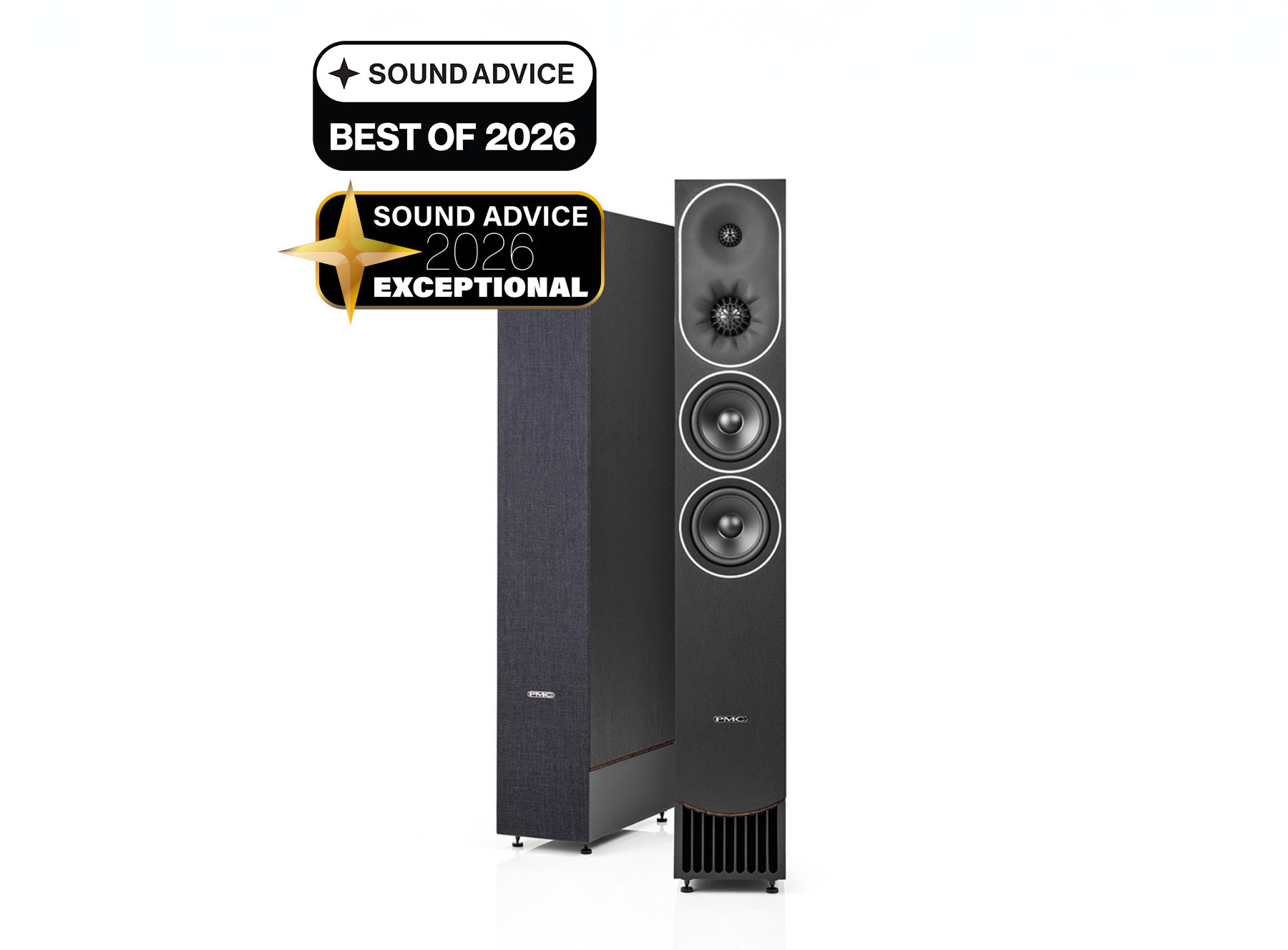
Winner! Best of 2026: floorstander over £2000

Best Floorstanding speakerWay back when – it must be at least a decade ago, and probably rather longer – I reviewed a pair of PMC’s big floorstanding OB1 speakers, a massively impressive and beautifully finished design so good that it became my go-to reference despite multiple changes of the equipment used to drive them. And now I’m sitting before a pair of the company’s prophecy9 floorstanders, which are considerably more advanced in their technology, hardly huge – a smidge over a metre tall, and just 165mm wide (though the cabinet is deep, at 360mm) – and yet capable of sound as massive as it is controlled and fine-detailed.
I’m expecting huge speakers from looking at pictures of the whole prophecy range, which runs from the little prophecy1 standmounters through the prophecy5 and 7 floorstanders to these range-toppers - so I’m pleasantly surprised when the 9s are on the premises, even if the boxes in which they arrive are unusually wide (the speakers sit in them sideways) and reassuringly heavy. Compact(ish) they may be, but these are no lightweights at around 28kg apiece - unpacking them and setting them up is a two-person job.
And at the risk of getting over-excited about the packaging, it’s good to see PMC has boosted its eco-credentials with this range. It’s lost all that expanded polystyrene and plastic in favour of structural cardboard and a neat cloth bag over each speaker, which complements the use of sustainable veneers and finishes – in natural or blackened walnut, or medium oak – for the speakers themselves.
The 9 slot into my system in place of the prodigy5 I’ve been using for a while, and though they’re larger, they hardly dominate the room - these speakers are designed to be room-friendly both acoustically and visually, and prove very easy to live with. Neither are they that hard to drive, though switching from my current set-up of an Eversolo DMP-A6 Master Series streamer running into vintage Marantz MusicLink monoblocs to an even more compact set-up using Cambridge Audio’s fire-breathing Evo 300 streamer amp delivers rapid proof of PMC’s claim that these are speakers designed to grow with their user’s system.
Range-topping speakers driven by a one-box streamer amp? It may sound like an unbalanced kind of set-up, but in financial terms it seems more logical: the 9 are £8975 per pair, and the electronics driving them just a shade under £3500, which is about right. I have no doubt you could go even further with the partnering source and amplification, though - and the sound makes even more sense than the maths.
The prophecy9 are (literally) built on the company’s ‘LaminairX’ technology, which here takes the form of a massive metal extrusion, its fins controlling the airflow within the Advanced Transmission Line (a folded tunnel within the speaker). Here it’s used to tune the low-frequency output of the two in-house 125mm ‘LTXL’ mineral cone bass drivers - in common with the cabinets, these drivers aren’t exactly enormous, but they’re capable of huge, extended-yet-tightly-controlled bass when the music demands. And the ‘LaminairX’ unit literally acts as the anchor for the speaker, its low-down weight giving stability without the need for a footprint-spreading base - the speaker stays slim yet firmly planted, the rest of the cabinet being decoupled from the metal assembly via a gasket.
Above those drivers is what PMC calls its ‘n-compass’ module, integrating custom-designed high frequency tweeter and midrange drivers so they act as a single driver with enhanced dispersion and imaging characteristics. It’s all part of the ‘holistic’ design here – as PMC describes it – in which every element of the speaker, from the drivers to the cabinet and even the magnetically-attached full-length grille, is designed with all the other bits, creating a design in which every part is complementary. Of course, everything being created and engineered in-house and custom-made helps with…
SOUND QUALITY
As you may have gathered already, there’s much to enjoy in the way the prophecy9 deliver music. That novel, yet well-proven, bass tuning makes the speakers easy to place in the room - and with a few moments levelling up using the adjustable feet, and giving them a slight toe-in, the result is not just a sound with excellent stereo imaging and focus, but that also retains those qualities for listeners sitting outside any specific ‘sweet spot’. Even way off-axis (in a typical L-shaped seating layout, for instance) there’s no noticeable change in tonality - instead the music is every bit as enjoyable almost anywhere in the room.
PMC says the prophecy9 has power handling of 30 - 300W, and while the speakers will work perfectly well on the end of an amplifier near the lower end of that range – my vintage Marantz monobloc power amps are rated at 50W – many will be wanting to know how loud they’ll go when fed with amplification nearer their upper limit. The executive summary is ‘bloody loud’, way beyond what anyone would sensibly want or need at home – but more to the point is that, harnessed up to the Cambridge streamer amp, they perform cleanly, crisply and without any loss of definition. They create that impression of unburstable performance, whether with the orchestral dynamics of a live BBC Prom or the driving rhythms of some classic New Order, complete with Peter Hook’s growling, grumbling and often melody-leading bass.
Dull these speakers never are, but neither do they lack subtlety – and while their sound is packed with information, there’s never any sense of it being hurled at you. Instead it’s all there to flesh out what’s being played, and whatever’s being played. True, they’re not for everyone, and many will be happy with the smaller, and more affordable, Prophecy models, but anyone investing in the Prophecy 9 is never going to feel short-changed.
LIVING WITH THE PMC PROPHECY9
The prophecy9 has been designed not only to build on the success of previous generations of PMC home-use speakers – specifically the twenty25i range, which continues only as active models – but also to be very easy to accommodate in a variety of room sizes. Even in small spaces, and used quite close to a rear wall, the speakers are capable of delivering extended but well-controlled bass, while the focus of the stereo image from that innovative tweeter/midrange module is remarkable even over an extended listening area.
Meanwhile these speakers are also able to fill larger rooms with captivating sound, and while they’ll work very well on the end of modest amplification, they will indeed ‘grow’ when fed with electronics of higher quality and output. You won’t be upgrading from these in a hurry.
CONCLUSION
The prophecy series is a major step up from the twenty25i series it replaces, and PMC’s concept of ‘holistic’ design and engineering has certainly paid off in the way these speakers ‘hang together’ to deliver music in a manner as thrilling as it is fulfilling. Sitting at the top of the prophecy tree, the 9 could quite possibly be the best ‘domestic’ speaker the company has ever made – and that back-story was already pretty impressive.
LISTENING NOTES
Paul Simon You Can Call Me Al
40 years on from its release, Simon’s Graceland album sounds as fresh as ever, as does the single responsible for introducing it to the world. And it’s open and dynamic via the PMCs, with Bakithi Kumalo’s taut bassline especially crisp and clean
Chic Good Times
Throwaway pop? Hardly, as is evidenced by the fact Nile Rodgers and various iterations of Chic are still out gigging and pulling in the crowds. This immaculately produced blockbuster really lets the PMCs’ bass do its stuff (see also John Deacon’s trademark bass-line on Queen’s Another One Bites The Dust)
LSO/Pappano/Copland Symphony No 3
In this recent release on its in-house LSO Live label, the London Symphony Orchestra under Antonio Pappano gives Copland’s music the full, majestic widescreen treatment, perfectly realised by the PMCs’ combination of massive weight and control, focus and openness
The prophecy9 is easy to set up and use, flexible when it comes to room size, positioning and the electronics to which it’s connected, and engineered and built to a very high standard. This is nothing short of a highly significant speaker, whether you’re going to start low and let your system grow into its capabilities, or slot it into an already very capable high-end set-up. You really should try to get a listen.
The beauty of the prophecy9 is that they’ll be as at home with a full-blown separates system as they will with one of the current crop of high-performance all-in ones. An obvious contender is that Cambridge Audio Evo 300 used for much of the testing here, combining as it does flexibility, ease of use, style and a serious dose of power, but the likes of Arcam’s SA35 streaming amplifier or, for those already having source components, PMC’s own Cor integrated amp would be a great combination with the speakers. If you want to go retro, try Quad’s 60s-look 33 preamp with a pair of bridged 303 power amps, each delivering 140W per channell.