Award winner
Find at
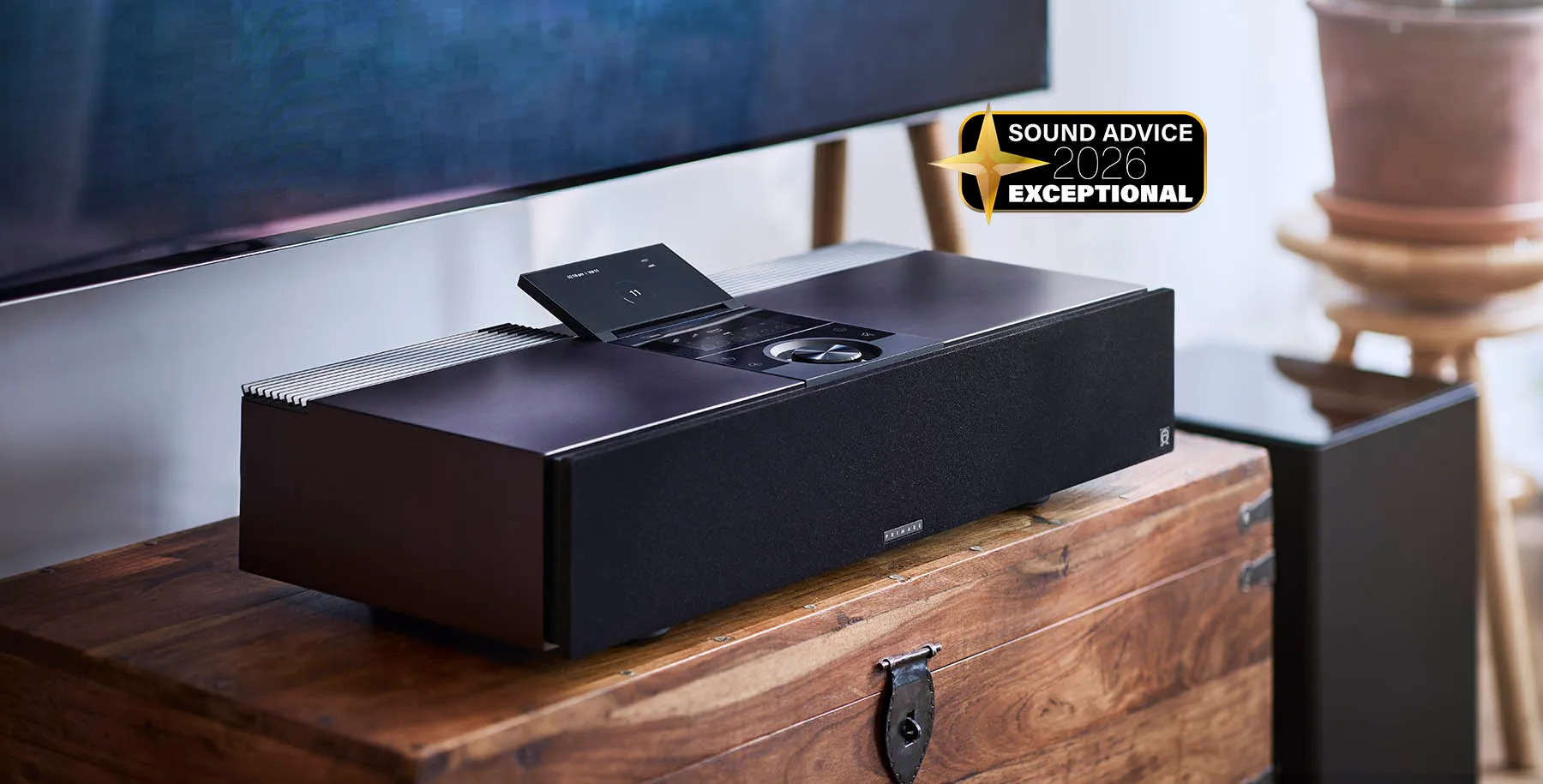
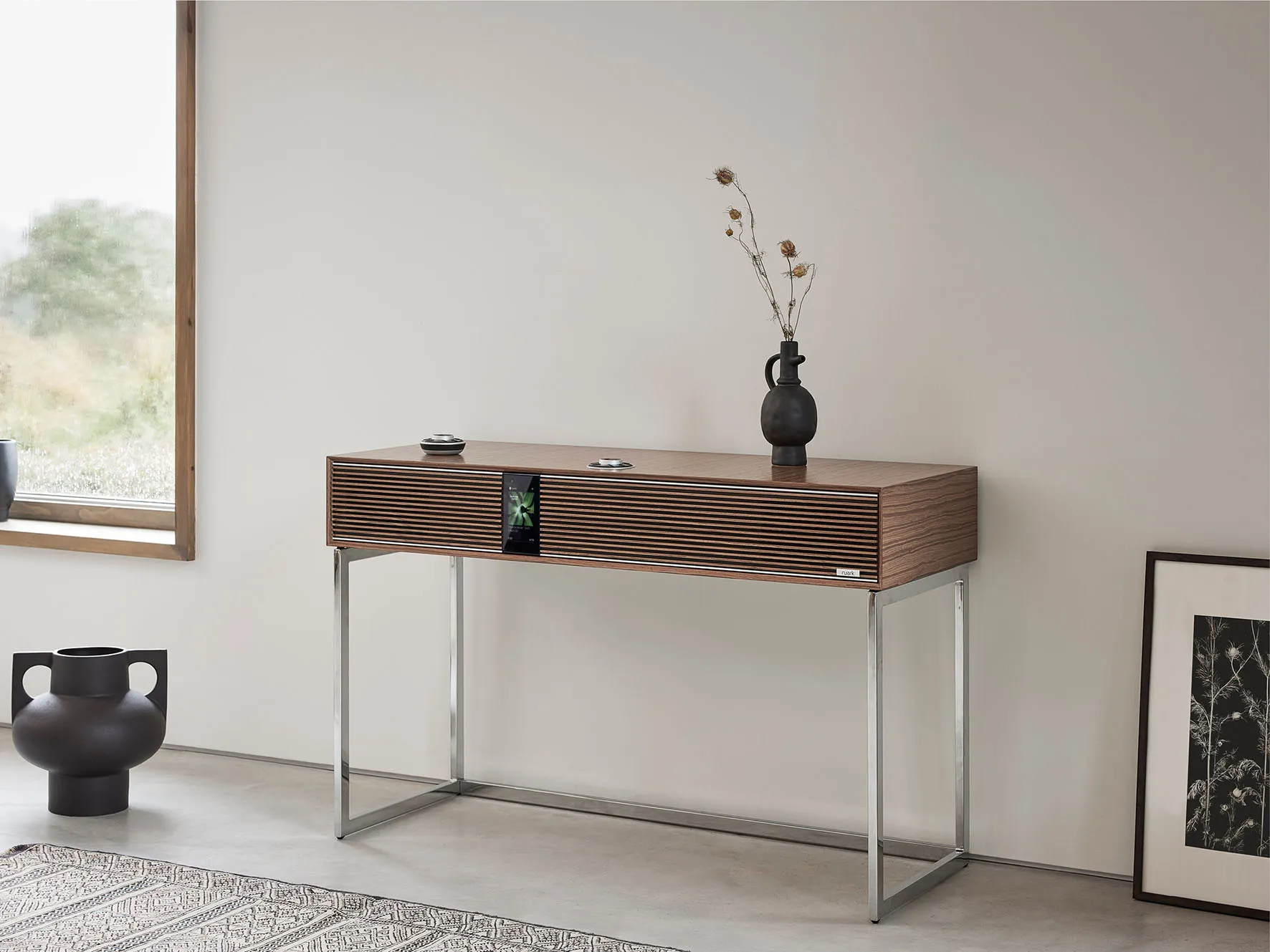
The high-end, high-performance one-box audio system with extended multiroom functionality is nothing new. The likes of Naim (and, more recently, its sister company Focal), Sonus faber, Primare and Ruark have been pushing the envelope in this particular sector for a while now.
As a company DALI may not be especially interested in breaking new ground, but it can generally be relied upon to have had a very thorough think about things before it decides to enter the fray in any particular part of the market. Which leads me, not entirely coincidentally, to the Vega all-in-one audio system.
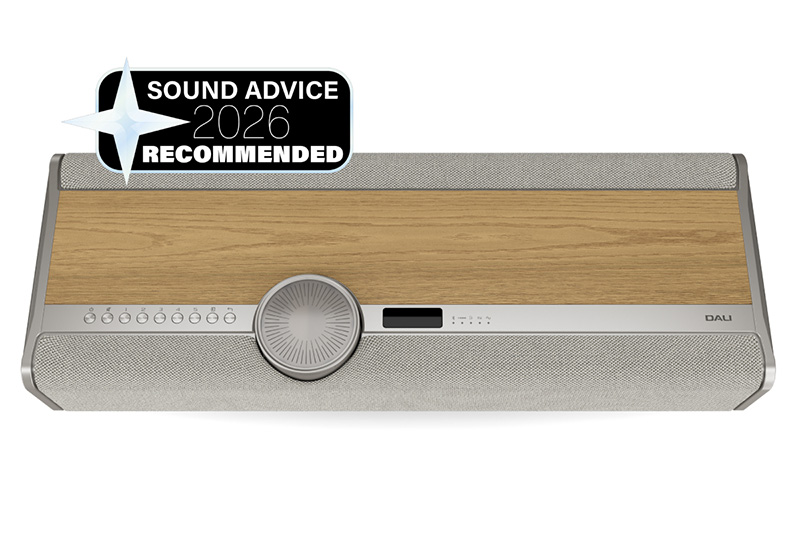
The Vega is an undeniably handsome, carefully designed, extensively specified, and beautifully finished all-in-one audio system - which is the least we can all expect, really, given that the company wants £2599 for it. The idea, quite obviously, is to hit the bullseye at the first attempt and crash the top table where the brands who charge big money for premium devices that combine performance, convenience and interesting industrial design all hang out.
The Vega is part of the BluOS ecosystem, which means it has impeccable multiroom credentials and can do its multiroom thing with a whole lot of products from a whole lot of brands. But I’m getting ahead of myself - this is a review that’s dealing with the DALI as a single, stand-alone entity.
DALI has provided plenty of options for getting audio information on board the Vega. Dual-band wi-fi (or the Ethernet socket) allows for the use of the ‘Connect’ versions of Qobuz, Spotify and TIDAL, as well as Apple AirPlay 2, and the BluOS gives access to an absolute stack of alternative music streaming services, as well as allowing for internet radio; wireless connectivity via Bluetooth is available too, and there’s compatibility with the aptX HD codec. Physical connections, meanwhile, consist of a USB-A slot for use with HDD or USB drives, an HDMI ARC socket, a digital optical input and a line-level analogue input on a pair of stereo RCA sockets.
Once on board, any digital information is given the once-over by DAC architecture running at a native 24bit/48Khz resolution - and then all analogue audio information is amplified by a total of 400 watts of Class D power before being distributed to an eight-strong driver array that’s bolstered by a couple of passive radiators.
When positioned on a shelf or other horizontal surface, the Vega features two tweeters and two mid/bass drivers facing forwards, the same complement facing backwards, and a passive radiator at either end of the cabinet where it looks a lot like an integral part of the structure.
The tweeters are a 25mm soft dome design that features low viscosity ferro-fluid for maximised power-handling and minimised thermal compression. They also have relatively large, damped rear chambers with a carefully designed air-path beneath the dome - this reduces dome resonance and allows the point at which the tweeters cross over to the mid/bass driver to be lower than is usual. Those mid/bass drivers are 114mm paper-and-wood-fibre cones - this is a material the company has been using in its drivers for, oh, ages now, and is a technology that features in DALI speakers costing considerably more than this.
The auxiliary bass radiators have been specified to bolster the system’s low-frequency presence in preference to the more common bass reflex ports for one specific reason: the tuning frequency isn’t affected by the physical constraints of the cabinet, and greater low-end body should be the result. It’s a more complicated feat of engineering, naturally - each ABR diaphragm features a rubber roll surround and two spider suspensions, and is mass-loaded for maximum stability when the diaphragm is doing its ‘forwards/backwards’ thing. DALI is claiming low-frequency extension down to 32Hz thanks to this arrangement.
The amplification to power this driver array consists of eight 50-watt Class D bridge-tied load designs. This means each mid/bass driver and accompanying tweeter is effectively connected between two amp blocks operating in unison - the idea is to minimise distortion while maximising amplifier efficiency and heat dissipation. And in front of this amplification, naturally enough, there is some fearsomely complex DSP at work, charged with making the Vega create as expansive, focused and ‘stereo’ sound as is possible.
sound quality
Yes, 24bit/48kHz is undeniably high-resolution - but it’s a slightly underwhelming figure when you consider a) the resolution some of the Vega’s most obvious rivals are capable of operating at, and b) the resolution music is available at from some of the better music streaming services. Still, it seems fair to say the DALI absolutely maximises the resolution at which it’s capable of natively operating.
Whether it’s wirelessly streamed via TIDAL Connect or incoming via the digital optical socket from a network streamer, 24bit/48Hz sounds very gratifying indeed. Its presentation is spacious yet tightly unified, respectably dynamic yet unarguably nuanced, lavishly detailed and periodically engrossing.
It’s an expansive sound the Vega presents, with more than a hint of genuine ‘left/right’ stereo separation and a believable soundstage too. Tonality is on the warm-ish side, though far from fatally so, and frequency response is nice and even - having multiple drivers bolstered by a couple of bass radiators doesn’t compromise the nice even sweep from the top end down to the bottom. DALI’s claims for extension down to 32Hz don’t seem quite so fanciful when you hear the Vega in action, either.
The Vega does good work when it comes to detail retrieval, and is alert to even the most minor occurrences in a recording - even if they’re buried in a mix or banished towards the rear of the soundstage, the DALI will identify them and give them appropriate weighting and emphasis. Even the nuances of harmonic variation in a solo instrument or an unaccompanied voice can’t escape this system’s attention.
The top of the frequency range is benign - by no means a given in a system with quad tweeters - and has sufficient substance to offset the crunch and shine the DALI is capable of summoning. Low frequencies hit with a fair degree of determination and admirable control - the attack and decay of bass sounds is carefully managed, and the Vega expresses rhythms with a fair degree of confidence as a result. In between, the midrange is direct and communicative - the DALI’s facility with detail allows voices to sound eloquent and characterful.
There’s not a huge amount of dynamic headroom in evidence - the Vega can describe shifts in volume and intensity quite comfortably, but the distance it can put between ‘least’ and ‘most’ isn’t quite what you might be expecting from a system with 400 watts to call on. Perhaps this is a byproduct of the DALI’s fundamental character, which is almost self-consciously grown-up - there’s nothing wrong with a bit of sonic sophistication, especially when it’s such a good match for the visual sophistication of the system it’s coming from, but it wouldn’t do any harm if the Vega was able to let its hair properly down every now and again.
living with the DALI Vega
In some ways, it’s ‘premium all-in-one audio system’ business as usual here. The DALI Vega is impeccably constructed (the enclosure is mostly a High Impact Polystyrene moulding), and uses tactile and expensive-looking materials in all the critical areas - because in the area of the market it’s not enough to sound expensive, you have to look and feel it too.
So the Vega is a combination of touch-friendly acoustic fabric, anodised aluminium and wood veneer - it can be had in the natural oak shown at the top of this review or a darker oak alternative. And where the physical controls on the product are concerned, ‘tactile’ is almost too weak a word - at least where the volume control (which also allows you to navigate the few, but essential, items in the menu) is concerned. It’s a beautifully weighted, responsive quantity of aluminium that scrolls silently and is a straightforward pleasure to use even after prolonged exposure. It’s joined on the Vega by a selection of control buttons - there are five ‘preset’ buttons, ‘power on/off’, input selection, a ‘back’ button for use when in the menus, and a button that claims to be ‘mute’ but instead is actually a ‘play/pause’ control.
There’s a display to let you know what’s what as regards volume levels, lets you navigate set-up menus and so on - it’s disappointingly small if I’m being honest, and feels a bit underpowered. There’s also a small and unremarkable remote control handset that, if you were to make it your main method of interacting with the Vega, would undermine the luxuriousness of the experience more than somewhat. Happily, you’ll do most of what you need to do using the BluOS app - it’s stable, logical, comprehensive and covers every eventuality. Which is why so many brands are happy to get involved, I guess…
Where the DALI really scores in ‘living with it’ terms over any of its nominal competitors is in its flexibility where placement is concerned. When it’s flat on a horizontal surface, you can let it know its position relative to a rear surface in the menus - there are three settings. But thanks to some stunt engineering and the deployment of the company’s ‘Adaptive Orientation Adjustment’ technology, not only is the Vega happy to be positioned on a wall (DALI provides the necessary bracket), once it’s there it can operate in ‘landscape’ or ‘portrait’ orientations. The Vega detects its mounting position and automatically rearranges its stereo channel mapping (and EQ settings) accordingly - the idea is to ensure imaging remains consistent with no input from the listener required.
conclusion
In the end, DALI has covered all the bases with the Vega - and in a degree of style. It’s good to look at and to live with, nice to touch and operate, and it has a fistful of sonic talent. Your shelf, or your wall for that matter, can’t help but feel the benefit.
listening notes
Eartheater Malka Moma
Remarkably restrained and only slightly dramatic by her usual overwrought standards, there’s nevertheless plenty about this new Eartheater tune to put the DALI through its paces. The work it does with the tone and texture of the strings, in particular, is uncomplicatedly impressive.
David Sylvian and Ruichi Sakamoto Forbidden Colours
It’s the subtle, yet extensive, palette of disparate sounds and textures that gives this recording so much character, and the Vega’s ability to identify and contextualise the low-level dynamic and harmonic variations makes for a compelling listen even though nothing, at first, might seem to be happening.
Fats Waller Ain’t Misbehavin’
Despite the antique nature of this recording, it’s a remarkably direct and faithful account of a casually virtuosic pianist and his characterful singing voice - and the DALI makes both of these aspects absolutely plain, thanks to its midrange fidelity and mastery of tonal balance.
You buy the DALI Vega because you admire uncompromised and uncompromising engineering, because you enjoy expansive and absorbing sound, because you like a bit of convenience and flexibility, and because you know a nice operating system when you use one. And because you have the necessary disposable income to purchase all of this in one product.
A premium music streaming service subscription would seem to be the least the Vega deserves - so Qobuz or TIDAL, then. You’ll need a smartphone to host the control app and the streaming service app, too. And if you can bear to trail wires (beyond the mains lead) to the DALI, it’s worth connecting your TV via HDMI to get a taste of what movie night could sound like…