Tyre-kicker's guide
What are Mini and Micro RGB TVs , and why should you care?
John Archer explains why the Next Big Thing in TV technology is Mini and Micro RBG - and what that means for you...
Ladies and gentlemen, I regret to inform you the TV Tech world is at it again. Of course, ‘it’ means ‘coming up with yet another TV technology you need to get your head around, and giving it a name (or, rather, ‘names’) that again seem deliberately contrived to confuse the living heck out of you’.
The good news is that the new breed of ‘Mini RGB’ (or ‘Micro RGB’, depending on the TV brand you talk to) televisions about to flood the market have the potential to genuinely move the TV performance dial. And not just at the ultra high-end of things, either. In fact, one of the most startling things about Mini/Micro RGB technology is just how affordable it seems to be right out of the gate.
How Mini RGB technology works
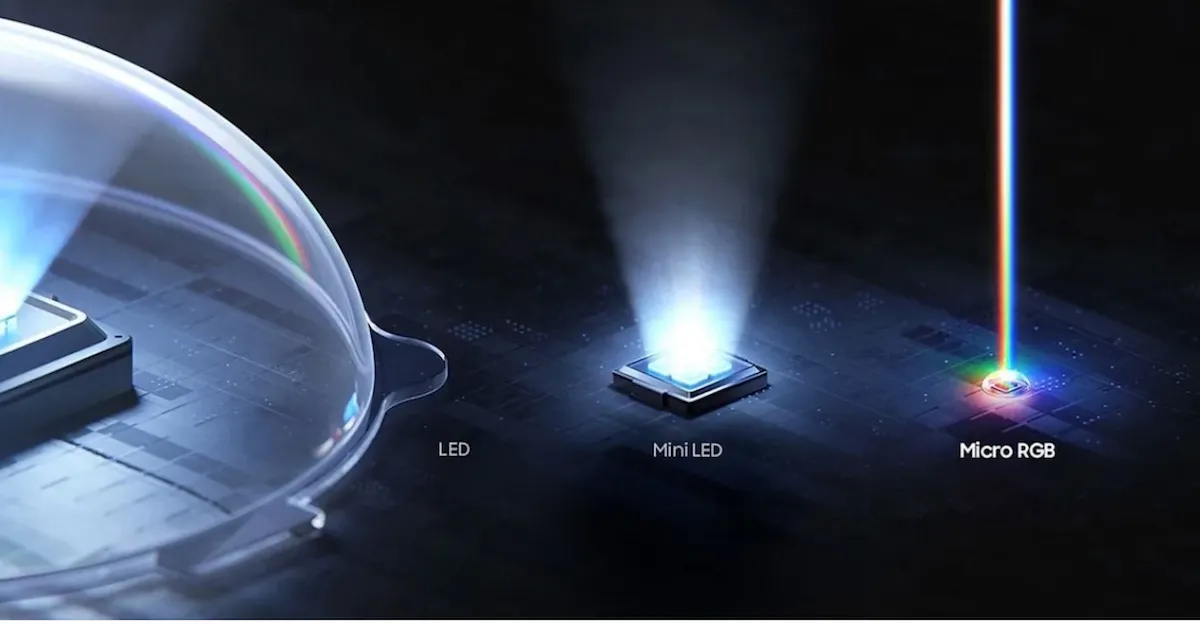
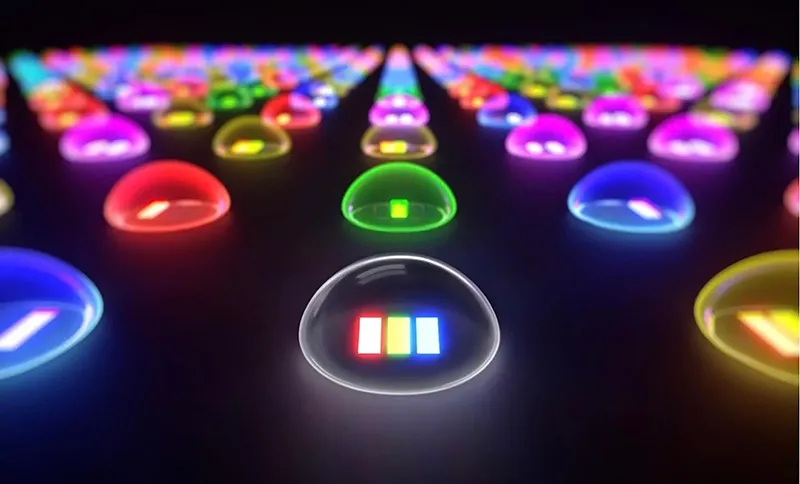
The Mini LED TVs I’ve been seeing for the past few years shine a single white or blue LED light through red, green and, if required, blue colour filters. Colour filters that are usually made using ‘Quantum Dots’, which refract the light through different sized ‘dots’ to create different colour wavelengths. Mini RGB TVs, on the other hand, actually use tiny individual red, green and blue LEDs to produce colour, removing the need for filters altogether.
Mini RGB technology is not to be confused with (ultra-expensive) Micro LED technology, where every single pixel in the screen gets its own incredibly small red, green and blue LEDs. With Mini RGB it's just each external backlight module that switches from white or blue lights shining through filters to separate red, green and blue lights making colour at source. There isn’t one Mini RGB light source for each pixel in the picture, so their light has to be shared across zones of pixels.
Because of this, the number of separately controllable RGB light zones used in a Mini RGB screen can have a big impact on picture quality, in the same way that current Mini LED TVs are impacted by how many local dimming zones they use to enhance contrast.
Why does Mini RGB matter?
Using actual red, green and blue lights rather than filtered white or blue backlights could potentially enable TVs to deliver power consumption savings, more brightness and, in particular, wider colour spectrums.
So it should follow that we can look forward to more TVs hitting not just 100% of the so-called DCI-P3 colour spectrum used in most of today’s HDR (high dynamic range) video mastering, but also much more of the far bigger BT.2020 colour spectrum that has, up to now, remained pretty much in the theoretical domain.
What is the difference between Mini RGB and Micro RGB?
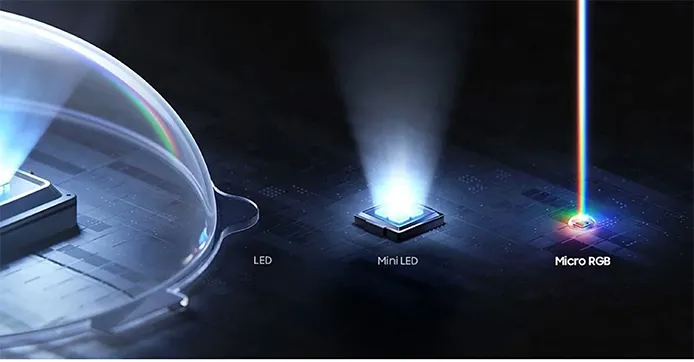
As their names suggest, Micro RGB TVs use smaller red, green and blue LEDs than Mini RGB TVs. This has the potential to deliver advantages when it comes to controlling those lights, resulting in more accurate, better-defined colours.
How real this difference is in terms of final picture quality, though, and how much it’s down to crafty marketing, is currently up for debate. To be fair, though, at least LG is featuring both Micro RGB and Mini RGB models in its upcoming TV range, suggesting that there are at least some potential practical performance differences in play.
Who’s doing it?
The first brand to show off a Mini RGB TV was actually Sony, back in March 2025. In typical Sony fashion, though, the brand has refused to be rushed when it comes to fine-tuning and tweaking its new technology, to the point where it’s not expected to be released until the summer of 2026.
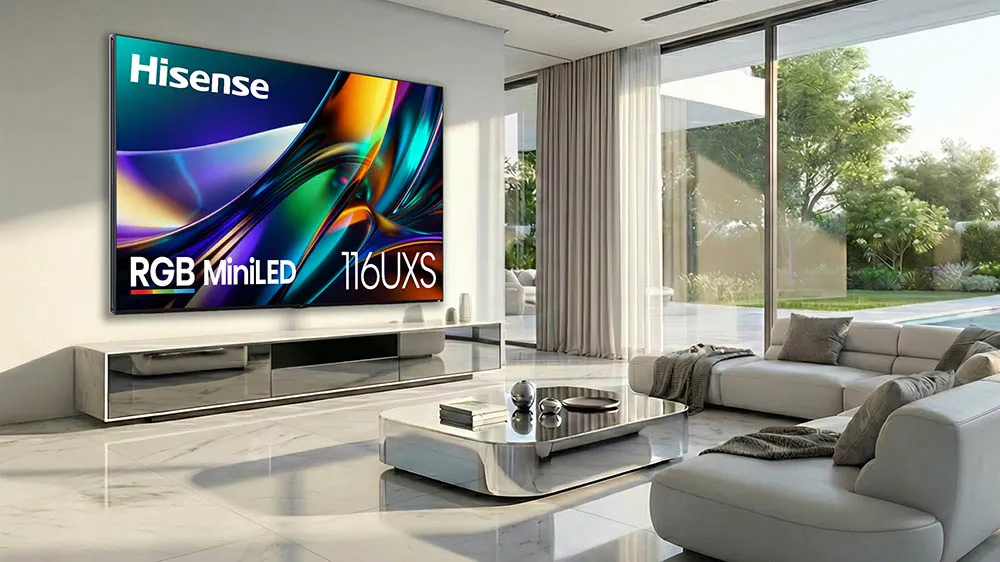
The very first brand to actually put a Mini RGB TV on sale was Hisense, with the September 2025 launch of its huge 116in 116UX. With a price tag of £24999, this Mini RGB TV debutante raised expectations that this would be another seriously premium technology more likely to be found on the yachts of oil barons than in your average living room. These expectations only grew when Samsung followed the Hisense model in late 2025 with a 115in Micro RGB model that also debuted at £24999.
Hisense is seeking to retain the sense of it being the leader in Mini RGB technology by being the first brand to add an extra Cyan LED to the red, green and blue LEDs for its flagship 2026 TV, the 116UXS. It’s sticking with regular RGB lights for the majority of its upcoming Mini RGB models, though.
More importantly for regular consumers, Hisense and Samsung are being joined in their adoption of Mini RGB and Micro RGB technology in 2026 by… well, just about everyone. The biggest surprise at the 2026 Consumer Electronics Show in January was just how omnipresent Mini and Micro RGB TVs were. Hisense and Samsung revealed they were expanding their Mini/Micro RGB offerings across multiple TV series, and they were joined in this promise by both LG and TCL. And as well as being much more widespread than expected, it was also startling to see Mini and Micro RGB TVs already hitting (theoretical) prices largely in line with previous Mini LED TVs. In other words, the technology has already apparently gone mainstream, with pricing of individual models being dictated more by such factors like the number of dimming zones they use than the Mini RGB’s technology’s innate newness.
Where do Mini and Micro RGB TVs stand against other TV technologies?
Until IFA last year I’d imagined Mini RGB technology would attract a fairly significant premium, at least for a few years, as it went about delivering a truly next-generation level of performance. At IFA, though, Sony started suggesting that its debut Mini RGB TV (when it eventually launches) might not be much more expensive than one of the brand’s current flagship Bravia 9 series LCD models. And then at CES there were multiple brands suggesting they were preparing to sell multiple Mini RGB ranges - with the cheaper models priced similarly to current mid-range Mini LED TVs.
While Mini RGB TVs have the potential to be particularly transformative for LG, as it gives the brand a chance to reboot its long-suffering LCD business, OLED is still seen as very much LG’s premium technology. Samsung, meanwhile, is essentially pitching its premium OLED TVs this year right alongside its premium Micro RGB TVs, while TCL is actually positioning a new ‘Super’ Quantum Dot technology above its top Mini RGB TV for 2026 (which raises the prospect of another little tech war between the Mini RGB upstart and the latest innovation around more established Quantum Dot Mini LED technology). TCL is currently the only brand taking this stance, mind you.
Sony does seem set to place its long-gestating Mini RGB TV at the top of its 2026 range, despite also selling OLED models, in much the same way that it positioned its Bravia 9 Mini LED TVs above its Bravia 8 II OLED TVs.
While opinion seems to be divided among manufacturers about where to pitch Mini RGB technology, from a consumer perspective it’s perhaps useful to share what a couple of separate TV engineers at brands which deal with both LCD and OLED technologies told me in recent months: Mini RGB TVs are ultimately just LCD TVs. In other words, they ultimately still depend on external backlights to illuminate pictures, rather than offering the genuine pixel-level control provided by OLED screens. So they are still susceptible to backlight clouding and blooming issues - even if the blooming is, at least, likely to adopt the colour tone of the dominant colour in a particular light zone, rather than taking on a more distracting grey shade as happens with regular Mini LED TVs.
There’s talk, too, of a colour crosstalk issue with Mini RGB technology, where the output from each red, green and blue LED can impinge on that of its neighbours, leading to some unwanted colour tones unless it’s carefully controlled at the hardware level.
To reiterate what I said earlier, though, Mini RGB can potentially get much brighter than OLED, especially when it comes to bright HDR images that fill pretty much the whole screen. It can also, as discussed previously, potentially cover much wider colour gamuts than any current OLED screen.
So where does Mini RGB go from here?
While the way Mini/Micro RGB technology is shaping up suggests that it’s perhaps not the all-conquering, fully next-generation picture technology we might initially have been hoping for, it does seem capable of taking TV colour to places we’ve never seen it taken before.
Perhaps more importantly, though, unless TCL scores a major success with its new ‘Super’ Quantum Dots, Mini RGB is shaping up to quickly become the new default LCD TV technology - at least in the middle and higher parts of a TV brand’s ranges. And anything that might deliver a wholesale improvement to the core quality of the mainstream LCD TV market has got to be welcome.
Look out for Mini RGB reviews on Sound Advice
Needless to say, Sound Advice intends to be as on top of the best new Mini RGB technology has to offer as it is with the more established TVs out there. Basically, so long as Mini RGB TVS are worth covering, Sound Advice will cover them with the established level of detail.
